
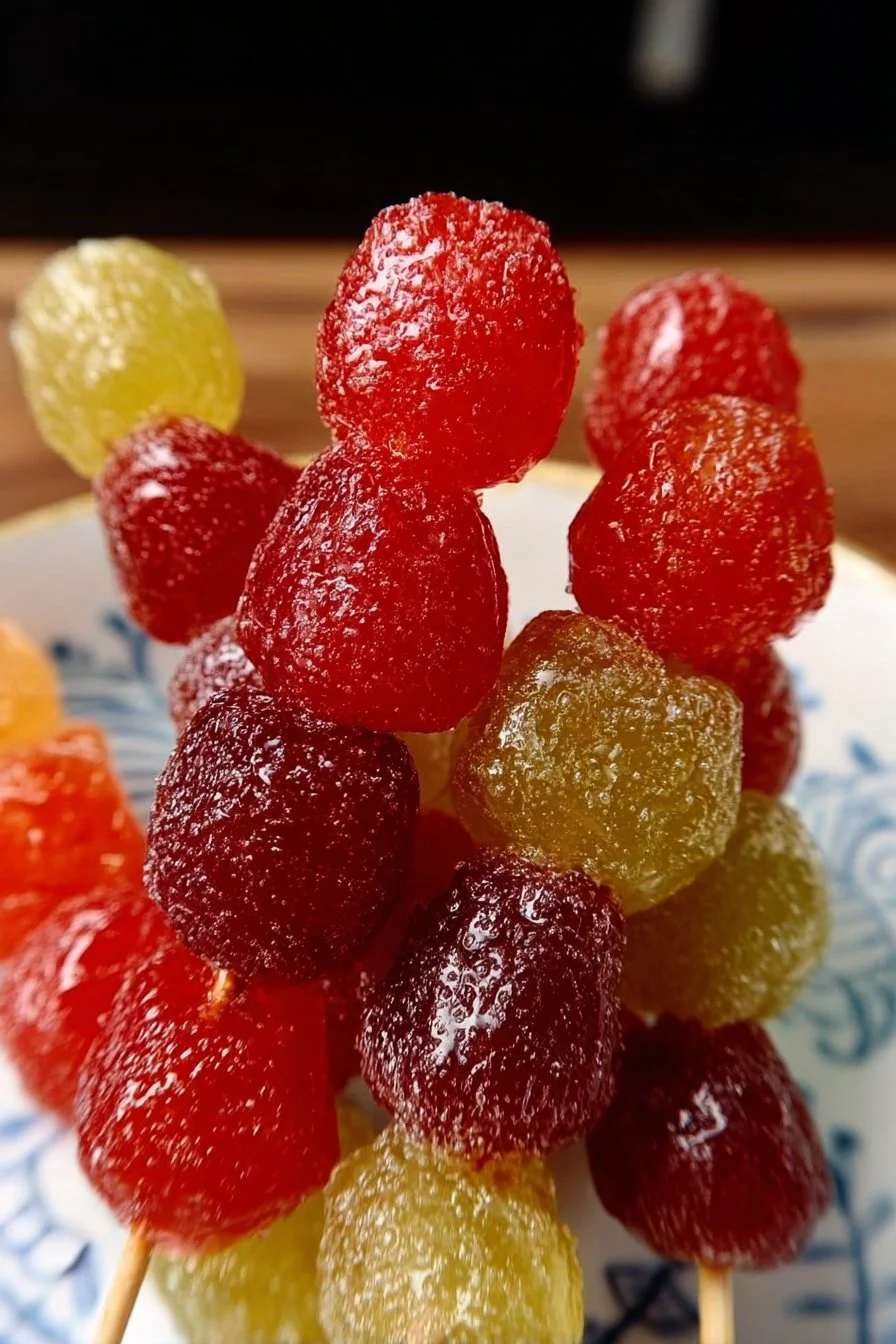
Tanghulu coats fresh fruit in a thin, brittle sugar shell that cracks when you bite into it. This version uses strawberries or seedless grapes, 2 cups of sugar, and 1 cup of water. Drying the fruit thoroughly and cooking the syrup to hard-crack stage matter much more than waiting for a particular shade of amber.
Set up the skewers and cooling surface before turning on the heat. Once the syrup is ready, you need to coat the fruit promptly. A candy thermometer makes the endpoint easier to judge, while a cold-water test provides a second way to check the cooled syrup. Plan to serve the skewers soon after the coating sets.
On This Page
Why This Recipe Works
Tanghulu is a contrast of juicy fruit and hard candy. Water boils away as the syrup heats, leaving enough concentrated sugar to form a brittle coating. If you stop while the syrup is too cool, it can make a soft, sticky layer instead. Moisture on the fruit also interferes with the shell, so preparation begins with drying, not with the saucepan.
Ingredients for Tanghulu
Choose firm fruit with sound skins and no bruised or leaking areas. Small strawberries and grapes are easier to coat than oversized pieces. The recipe makes about 10 small skewers with 3 pieces each, depending on fruit size. The syrup is a dipping bath; some will remain in the pan after coating.
Fruit
- 1 pound firm strawberries or seedless grapes, washed, completely dry; about 30 small pieces
Sugar Shell
- 2 cups granulated sugar
- 1 cup water
How to Make Tanghulu
1. Prepare the work area. Wash the fruit, remove unwanted stems, and dry it on towels or a rack until no surface moisture remains. Put only as much fruit on a skewer as can fit into the syrup. Lay out a silicone mat or lined tray where finished tanghulu can cool without touching another skewer.
2. Watch the syrup endpoint. Heat the measured sugar and water over medium heat. Once it boils, leave it unstirred and watch the thermometer as it approaches 300°F. The probe should read the liquid rather than touch the pan bottom. A clear or faintly golden syrup can be ready; a dark caramel color is not the target.
3. Check the cooled sample. If you are making tanghulu without a thermometer, use a spoon to drop a small amount into cold water. Let it cool before testing it: the threads should break sharply instead of bending. Recipe reference: Peel with Zeal, Tanghulu. See Yale candy-science guidance on the hard-crack stage.
4. Coat and cool. Take the ready syrup off the heat and rotate a skewer through it quickly. Let extra syrup drain back before setting the fruit down. Thin coverage is easier to bite than a thick lump. Allow about 5 minutes for the shell to cool completely, and stop if the syrup becomes burnt or too stiff to coat evenly.
How to Serve
Serve tanghulu on a plate with the skewers easy to grasp. Keep finished pieces apart so the shells do not stick together. The candy is hard and the skewers are pointed, so portion it thoughtfully for the people eating it. Children can help wash fruit, but an adult should manage the saucepan and dipping.
Wash and dry the fruit ahead, then keep it refrigerated until you are ready to prepare the skewers. Dry it again if condensation forms. Cook the syrup close to serving time. Tanghulu is less suited to a long buffet wait or a humid kitchen than a dessert that is intended to stay soft.
Storage and Reheating
Enjoy tanghulu shortly after making it for the crispest coating. Fruit moisture gradually softens the shell, and refrigeration can add condensation when cold skewers return to room temperature. If you keep leftovers, refrigerate the fruit promptly and expect a softer coating; do not promise the same crunch the next day. Do not reheat the finished skewers.
Keep perishable ingredients properly chilled; the FDA food storage guide explains cold storage and prompt refrigeration.
Tips and Variations
- Use a deep enough dipping bath but leave generous headroom in the saucepan.
- Choose intact grapes and firm berries; cut, juicy surfaces make coating harder.
- Keep fingers well away from syrup even when it looks cool enough to touch.
- Let the pan cool before cleanup, then use warm water to loosen hardened sugar.
Frequently Asked Questions
Why is my tanghulu sticky?
The syrup may not have reached hard-crack stage, or the coating may have absorbed moisture from the fruit or surrounding air.
Must the syrup turn amber?
No. Aim for 300°F and a brittle cooled sample. Waiting for a dark color risks burning the syrup.
Can I use grapes instead of strawberries?
Yes. Seedless grapes are suitable when they are firm, intact, and completely dry before dipping.
Do I need an ice-water dip for every skewer?
No. Tanghulu can set on a prepared silicone mat. Use cold water to test a small syrup sample, and avoid soaking the finished coating.
Is this a make-ahead dessert?
Prepare the fruit ahead if useful, but dip and serve close together. The shell loses its crispness as it picks up moisture.
More Recipe Ideas
Plan a meal or dessert alongside tanghulu with these related recipes.
- Brookie Cookies
- Strawberry Cream Cheese Muffins
- Chocolate Covered Strawberry Brownies
- No-Bake Cookies and Cream Cheesecake Balls
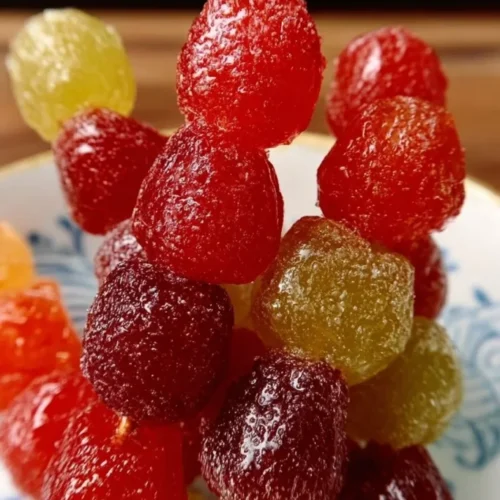
Tanghulu Recipe (Chinese Candied Fruit)
Ingredients
Fruit
- 1 pound firm strawberries or seedless grapes washed, completely dry; about 30 small pieces
Sugar Shell
- 2 cups granulated sugar
- 1 cup water
Instructions
- Wash the fruit, remove stems where needed, and dry every surface thoroughly. Thread about 3 small pieces onto each of 10 long food-safe skewers and prepare a silicone mat or parchment-lined tray.
- Place 2 cups sugar and 1 cup water in a heavy saucepan. Heat over medium heat without stirring once the mixture begins to boil, until a candy thermometer reaches 300°F, approximately 10–20 minutes. Do not wait for an amber color.
- If testing without a thermometer, carefully drop a little syrup from a spoon into cold water. The cooled threads must snap cleanly instead of bending. Keep hands clear of the hot syrup.
- Remove from the heat once the syrup reaches hard-crack stage. Quickly rotate each skewer through the syrup, let excess drip back, and rest on the prepared surface without touching the coating. Stop using the syrup if it burns or becomes too thick to coat thinly.
- Allow about 5 minutes for the coating to become hard and completely cool. Serve the 10 small skewers promptly for the crispest shell.
Notes
- Enjoy shortly after making; moisture softens the candy shell.
- Handle the hot sugar with long skewers and keep children away from the saucepan.