
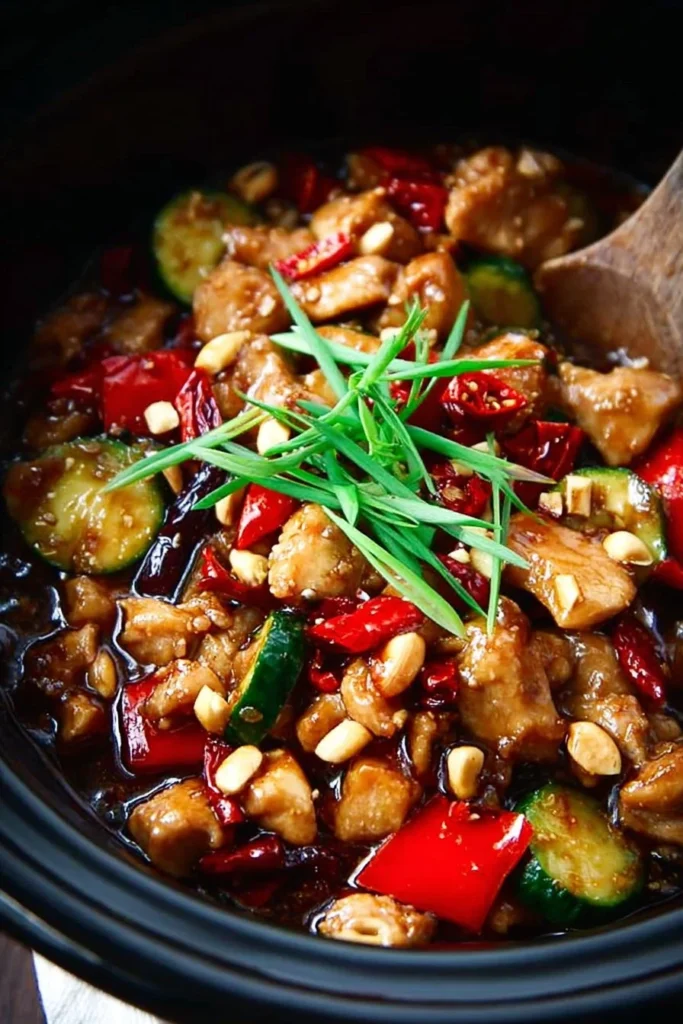
If you love a good mix of flavors and textures in your meals, then Skinny Slow Cooker Kung Pao Chicken is a perfect fit for you. This tasty dish combines tender chicken, colorful vegetables, and crunchy nuts in a sweet and spicy sauce, all cooked effortlessly in a slow cooker. You can come home to a warm and satisfying meal with minimal effort!
Why Make This Recipe
Making Skinny Slow Cooker Kung Pao Chicken at home is a great choice for several reasons. Firstly, it is healthier than the restaurant version, allowing you to enjoy the same delightful taste without the extra calories. Secondly, it’s simple to prepare and cooks while you go about your day. Lastly, it’s packed with protein, veggies, and healthy fats, making it a well-rounded meal for the whole family.
How to Make Skinny Slow Cooker Kung Pao Chicken
Making this delicious dish is easy! Just follow these simple steps to create your own Skinny Slow Cooker Kung Pao Chicken.
Ingredients
- 1 ¼ pounds cubed boneless skinless chicken breasts pieces (cut into bite-sized chunks)
- ⅛ teaspoon salt
- ¼ teaspoon black pepper
- 3 tablespoons olive oil
- 1 large chopped red bell pepper
- 1 medium chopped zucchini
- ⅔ cup roasted cashews (or roasted peanuts)
- 4-6 dried red chili peppers (found in Asian supermarkets or the International section—see NOTE)
- ½ cup low-sodium soy sauce
- ½ cup water
- 3 tablespoons honey
- 2 tablespoons hoisin sauce
- 3 cloves minced garlic
- 1 teaspoon grated fresh ginger
- ¼ teaspoon dried red pepper chili flakes (or more to taste)
- 2 tablespoons cornstarch (or arrowroot powder)
- 2 tablespoons water
Directions
- In a large ziplock bag, add the cubed chicken, salt, and black pepper. Shake well to coat the chicken pieces.
- Heat a large skillet over medium-high heat. Add the olive oil and the seasoned chicken. Cook for about 5-7 minutes until the chicken is browned. Transfer the chicken to the slow cooker.
- In a medium bowl, whisk together soy sauce, water, honey, hoisin sauce, minced garlic, grated ginger, and dried red pepper chili flakes. Pour this sauce over the chicken in the slow cooker.
- Cover and cook on LOW for 2-4 hours or on HIGH for 1-3 hours. (SEE NOTE)
- About 30 minutes before serving, whisk together cornstarch and water in a small bowl. Stir this mixture into the slow cooker.
- Add the chopped red bell pepper, chopped zucchini, roasted cashews, and dried red chili peppers.
- Cover and cook on HIGH for another 20-30 minutes until the vegetables are tender and the sauce has thickened. You can add more water if you prefer a thinner sauce.
- Sprinkle with sesame seeds and green onions before serving. Serve over rice, quinoa, or noodles if desired.
How to Serve Skinny Slow Cooker Kung Pao Chicken
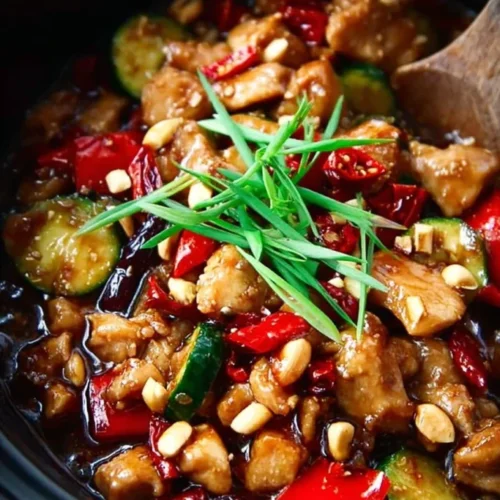
Serve your delicious Kung Pao Chicken over a bed of fluffy rice, nutrient-rich quinoa, or your favorite noodles. You can also top it with sesame seeds and sliced green onions for added flavor and crunch.
How to Store Skinny Slow Cooker Kung Pao Chicken
Once cooled, store any leftover Kung Pao Chicken in an airtight container in the refrigerator for up to 3-4 days. You can also freeze it for up to 2-3 months; just remember to reheat it thoroughly before serving again.
Tips to Make Skinny Slow Cooker Kung Pao Chicken
- Always ensure to cut the chicken into equal-sized pieces for even cooking.
- Adjust the spice level by adding more or fewer red chili peppers according to your taste.
- For extra flavor, marinate the chicken in the sauce for a few hours before cooking.
- Feel free to add other vegetables, like asparagus or snap peas, to suit your preferences.
Variation
You can easily switch chicken for shrimp or tofu in this recipe for a different protein option. You could also experiment with various nuts, like almonds or walnuts, based on your taste preference.
FAQs
1. Can I use frozen chicken for this recipe?
Yes, you can use frozen chicken, but it might take longer to cook. Be sure to check that the chicken is fully cooked before serving.
2. Is this recipe gluten-free?
To make this recipe gluten-free, use gluten-free soy sauce instead of regular soy sauce.
3. Can I make this recipe in a stovetop pot instead of a slow cooker?
Yes! You can cook everything in a large pot over medium heat instead of using a slow cooker. Just simmer until the chicken is cooked through and the vegetables are tender.
Skinny Slow Cooker Kung Pao Chicken
Ingredients
For the Chicken
- 1.25 pounds cubed boneless skinless chicken breasts Cut into bite-sized chunks
- ⅛ teaspoon salt
- ¼ teaspoon black pepper
- 3 tablespoons olive oil
For the Sauce
- ½ cup low-sodium soy sauce Use gluten-free soy sauce for gluten-free option
- ½ cup water
- 3 tablespoons honey
- 2 tablespoons hoisin sauce
- 3 cloves minced garlic
- 1 teaspoon grated fresh ginger
- ¼ teaspoon dried red pepper chili flakes Adjust to taste
For the Vegetables and Nuts
- 1 large chopped red bell pepper
- 1 medium chopped zucchini
- ⅔ cup roasted cashews Or roasted peanuts
- 4-6 pieces dried red chili peppers Found in Asian supermarkets
For Thickening the Sauce
- 2 tablespoons cornstarch Or arrowroot powder
- 2 tablespoons water
Instructions
Preparation
- In a large ziplock bag, add the cubed chicken, salt, and black pepper. Shake well to coat the chicken pieces.
- Heat a large skillet over medium-high heat. Add the olive oil and the seasoned chicken. Cook for about 5-7 minutes until the chicken is browned. Transfer the chicken to the slow cooker.
Mixing Sauce
- In a medium bowl, whisk together the soy sauce, water, honey, hoisin sauce, minced garlic, grated ginger, and dried red pepper chili flakes. Pour this sauce over the chicken in the slow cooker.
Cooking
- Cover and cook on LOW for 2-4 hours or on HIGH for 1-3 hours.
- About 30 minutes before serving, whisk together cornstarch and water in a small bowl. Stir this mixture into the slow cooker.
- Add the chopped red bell pepper, chopped zucchini, roasted cashews, and dried red chili peppers.
- Cover and cook on HIGH for another 20-30 minutes until the vegetables are tender and the sauce has thickened.
Serving
- Sprinkle with sesame seeds and green onions before serving. Serve over rice, quinoa, or noodles if desired.