

Sauerkraut is a type of fermented cabbage that has a tangy flavor and crunchy texture. It’s not just a tasty addition to meals; it also offers several health benefits. Making sauerkraut at home is easy and requires just a few ingredients.
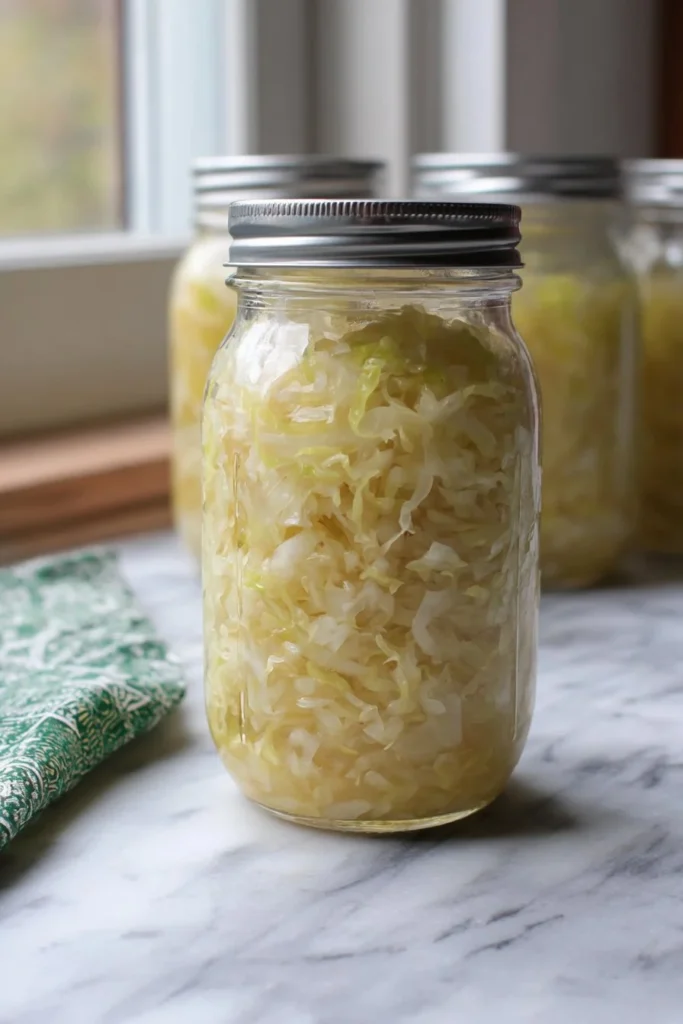
Why Make This Recipe
Making sauerkraut at home allows you to enjoy fresh flavors and control the ingredients. You can adjust the saltiness and taste to your preference. Plus, homemade sauerkraut is packed with probiotics, which are good for your gut health. This simple recipe is a fun and rewarding way to explore fermentation.
How to Make Sauerkraut
Ingredients:
- 1 Tbsp salt for every 800 grams of cabbage (about 2 Tbsp salt for every head of cabbage)
- Fresh Green Cabbage
Directions:
- Start by washing your fresh cabbage. Remove any wilted or damaged leaves.
- Slice the cabbage into thin strips. You can use a sharp knife or a mandoline for this.
- Place the sliced cabbage in a large bowl. Sprinkle the salt over the cabbage.
- Massage the salt into the cabbage for about 5-10 minutes until it starts to release its juices.
- Pack the cabbage tightly into a clean glass jar or airtight container. Press down to remove air pockets.
- Make sure the cabbage is submerged in its juice. If not, you can add a little water.
- Seal the jar or container loosely to allow gases to escape.
- Let it sit at room temperature for about 1 to 4 weeks. Check it regularly. You can taste it to see if you like the flavor.
- Once it’s fermented to your liking, seal it tightly and move it to the fridge.
How to Serve Sauerkraut
Sauerkraut is great on its own as a side dish or topping. You can add it to sandwiches, hot dogs, and salads for extra flavor. It’s also a delicious addition to dishes like sausage and potatoes.
How to Store Sauerkraut
Store your sauerkraut in the fridge after fermentation. It can last for several months. Keep it in an airtight container to maintain its crispness and acidity.
Tips to Make Sauerkraut
- Use fresh, high-quality cabbage for the best flavor.
- Make sure all your equipment is clean to prevent unwanted bacteria.
- If you want, you can add spices like caraway seeds for extra flavor.
- Keep an eye on the sauerkraut, especially in warmer weather, to avoid over-fermentation.
Variation
You can make different types of sauerkraut by adding other ingredients. For example, you can blend in grated carrots, apples, or even spices like ginger to create unique flavors.
FAQs
Q: How long does it take to make sauerkraut?
A: It takes about 1 to 4 weeks for the sauerkraut to ferment, depending on your taste preference and room temperature.
Q: Can I use other types of cabbage?
A: Yes, while green cabbage is traditional, you can use red cabbage or other varieties for different flavors and colors.
Q: Is sauerkraut healthy?
A: Yes, sauerkraut is rich in probiotics, vitamins, and minerals. It supports gut health and can be part of a healthy diet.
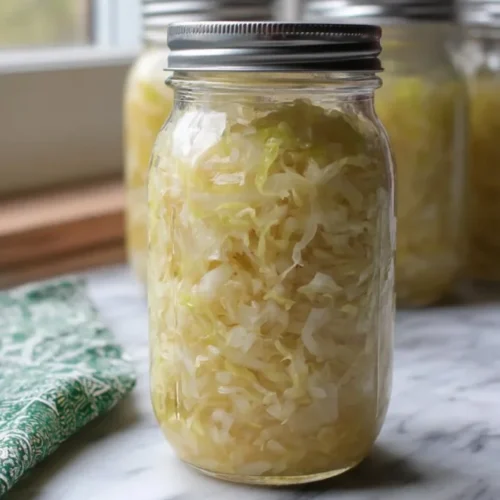
Sauerkraut
Ingredients
Main ingredients
- 1 head Fresh Green Cabbage Use high-quality, fresh cabbage for best flavor.
- 2 Tbsp Salt Use 1 Tbsp of salt for every 800g of cabbage.
Instructions
Preparation
- Wash the fresh cabbage and remove any wilted or damaged leaves.
- Slice the cabbage into thin strips using a sharp knife or mandoline.
- Place the sliced cabbage into a large bowl and sprinkle the salt over it.
- Massage the salt into the cabbage for about 5-10 minutes until it starts to release its juices.
- Pack the cabbage tightly into a clean glass jar or airtight container, pressing down to remove air pockets.
- Ensure the cabbage is submerged in its juice, adding a little water if necessary.
- Seal the jar or container loosely to allow gases to escape.
Fermentation
- Let the jar sit at room temperature for about 1 to 4 weeks, checking regularly and tasting for desired flavor.
- Once fermented to your liking, seal the jar tightly and move it to the fridge.