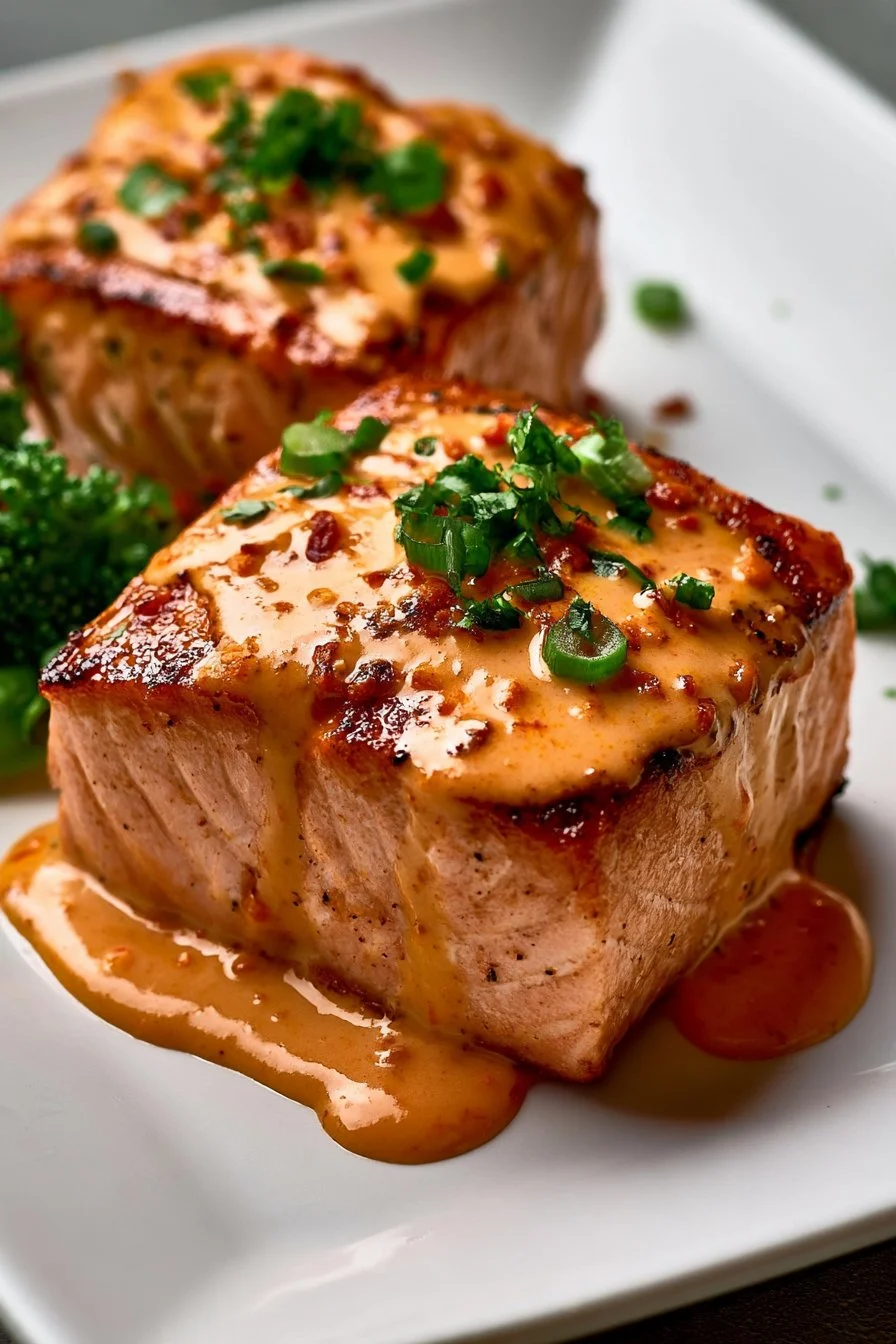

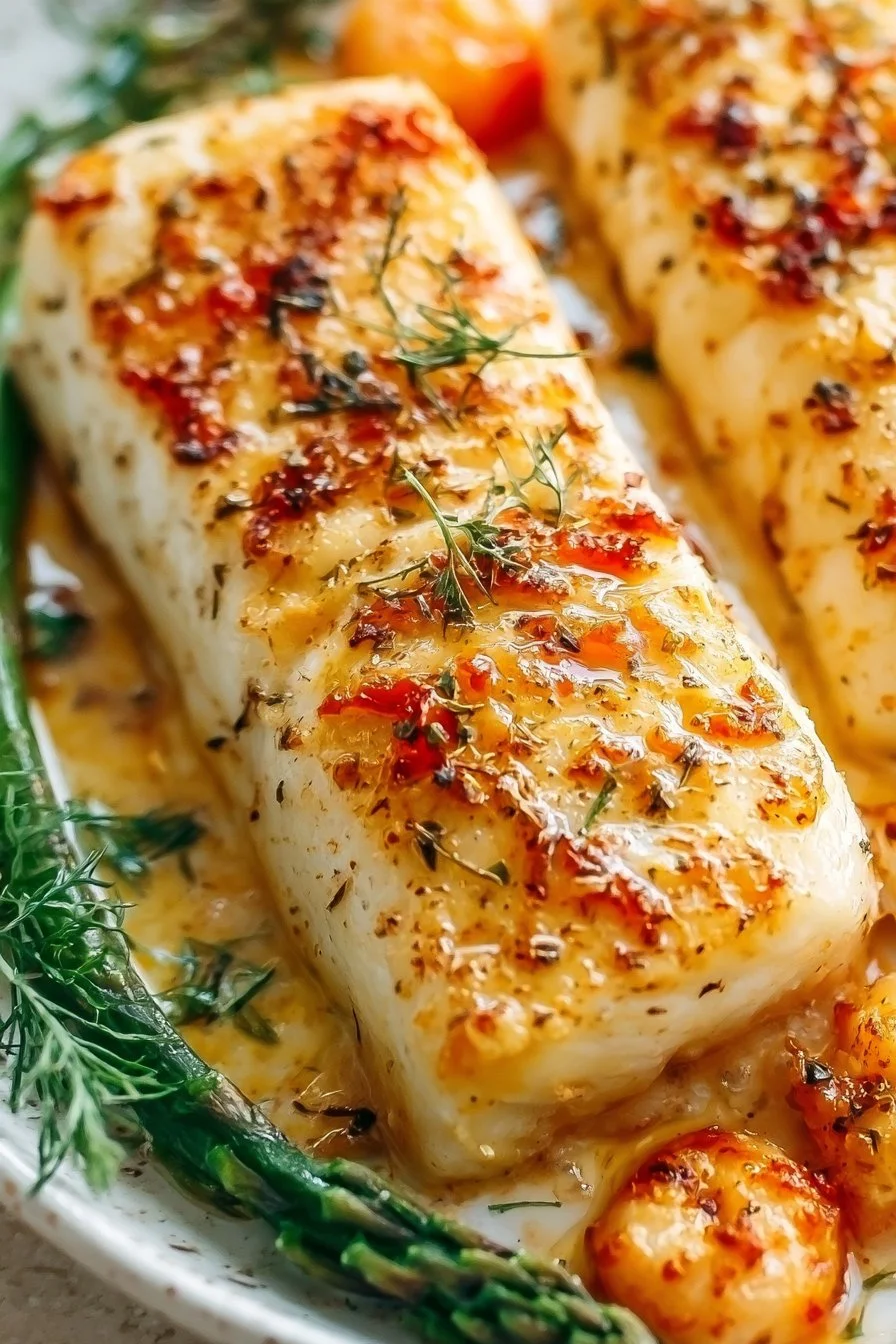
Baked halibut pairs mild, firm white fish with a lemon-Dijon coating, garlic, and dill. A moderate oven and an early doneness check help the fillets stay moist while the seasoning warms around them.
This recipe makes four portions, one fillet each. Choose pieces of similar thickness, ideally about one inch, so they finish close together; thinner tail pieces need an earlier check.
On This Page
Why This Recipe Works
Halibut is lean, so extending the bake for a deeply browned surface can dry the middle. Olive oil helps distribute the mustard and aromatics across the fish, while lemon adds brightness. The coating remains a light, oily pan sauce rather than becoming a thick glaze. An uncluttered baking dish lets the fillets cook evenly without requiring a searing stage.
Ingredients
Use four skinless halibut fillets or leave the skin underneath if your pieces have it. Freshly squeezed lemon juice gives a clean flavor, and Dijon helps the oil and juice blend when whisked. The measured teaspoon of dill can be fresh or dried; dried dill tastes more concentrated. Use the listed salt and pepper across the entire batch.
- 4 halibut fillets, similar thickness, about 1 inch
- 2 tablespoons fresh lemon juice
- 2 cloves garlic, minced
- 1 tablespoon Dijon mustard
- 1 teaspoon dill, fresh or dried
- 2 tablespoons olive oil
- 1 teaspoon salt
- 1/2 teaspoon black pepper
How to Make Baked Halibut
1. Prepare the fish and oven. Set the oven to 375°F before mixing the topping. Thaw frozen fish in the refrigerator, then blot the surfaces dry so the coating stays on the fillets instead of running into thawing liquid. Arrange them in a baking dish with small gaps between the pieces, placing any skin underneath. A dish just large enough for one layer keeps the pan juices from spreading too thin.
2. Blend a loose coating. Whisk the olive oil, lemon juice, Dijon, minced garlic, dill, salt, and pepper until the mustard is dispersed. Spoon the mixture over all four pieces and spread it across their upper surfaces. Coat shortly before baking: a long soak in lemon juice changes the surface texture. This mixture is deliberately fluid, so some will collect in the bottom of the dish.
3. Watch thickness and doneness. Bake for roughly fifteen to twenty minutes, checking thinner fillets sooner. Slide a thermometer into the thickest center from the side and look for 145°F; the flesh should be opaque and separate into moist flakes under gentle pressure. Remove a smaller piece when it finishes rather than waiting for the thickest fillet. The fish need not develop a dark crust.
4. Serve with the pan juices. Lift each fillet carefully with a broad spatula, leaving any skin behind if preferred. Spoon the warm lemon-and-oil juices over the fish. Serve promptly while the flakes are moist; holding the dish in a hot oven continues cooking the centers and can make this lean fish firm.
How to Serve
Rice, roasted potatoes, asparagus, or green beans work well beside the lemony fish. Spoon a little pan liquid over the starch too, rather than letting it pool beneath the fillet. A simple salad keeps the meal light without adding another rich sauce.
Storage and Reheating
Place cooked fish in a shallow covered container and refrigerate within two hours. Use within two days for best texture. Warm covered in a low oven with a little of the saved juices until the center reaches 165°F; reheated halibut will be firmer than freshly baked fish. Cook refrigerated raw fish within one to two days. See federal cold-storage guidance for refrigerated foods.
Tips and Variations
- Choose similar thicknesses rather than matching fillets by length.
- Keep the coating on the fish only briefly before it goes into the oven.
- Check small pieces separately and remove them as they finish.
- Use a broad spatula to lift delicate cooked fillets.
Frequently Asked Questions
Can I use frozen halibut?
Yes, thaw it overnight in the refrigerator. Drain and blot it before adding the topping.
Can I use another white fish?
Cod or haddock can work with the same seasoning. Their thickness and texture differ, so use the thermometer rather than the full baking time.
Should I remove the skin first?
You can bake the fillets skin-side down. The cooked flesh usually lifts away from the skin when served.
Is the topping supposed to thicken?
No, it is a lemon-and-oil coating. Spoon the loose juices over the finished fish.
Can I double the recipe?
Use two dishes or a larger pan that keeps the fish in one layer. Check each fillet individually rather than adding a fixed amount of baking time.
More Recipe Ideas
- Ranch Baked Fish
- Baked Parmesan Garlic Herb Salmon in Foil
- Roasted Green Beans with Garlic and Parmesan
- Baked Mushroom Rice recipe
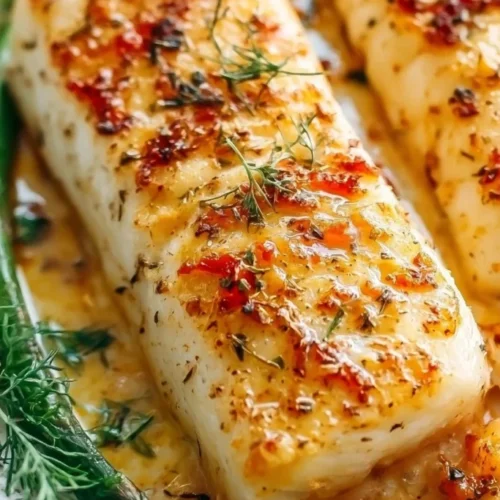
Baked Halibut
Ingredients
Fish and Coating
- 4 halibut fillets similar thickness, about 1 inch
- 2 tablespoons fresh lemon juice
- 2 cloves garlic minced
- 1 tablespoon Dijon mustard
- 1 teaspoon dill fresh or dried
- 2 tablespoons olive oil
- 1 teaspoon salt
- 1/2 teaspoon black pepper
Instructions
Season and Bake
- Preheat oven to 375°F. Pat four halibut fillets dry and arrange in one spaced layer in a baking dish, skin-side down if applicable.
- Whisk lemon juice, garlic, Dijon, dill, olive oil, salt, and pepper. Divide over the fillets and spread across the tops.
- Bake at 375°F for 15–20 minutes until opaque and easily flaked, with the thickest center at 145°F. Check thin pieces early and remove each as it finishes.
- Serve one fillet per portion with the warm pan juices.
Notes
- Chill leftovers promptly, within 2 hours, and eat within 2 days.
- Bring stored fish to 165°F when reheating; expect firmer flakes.