
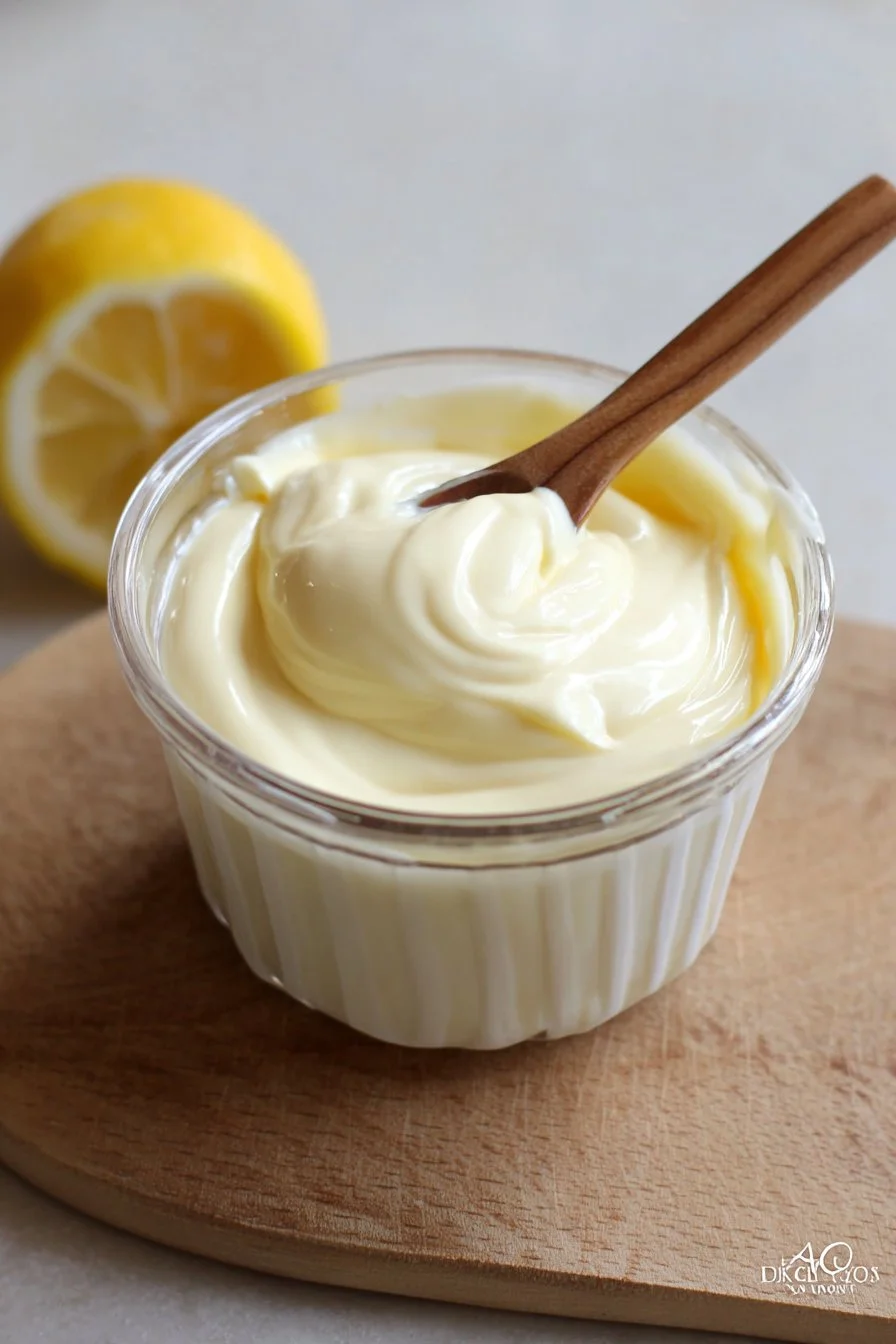
Learn make mayonnaise with a labeled pasteurized whole egg, sunflower oil, mustard, and measured lemon juice and vinegar. A narrow immersion-blender jar helps the oil combine with the egg base. The method below explains the blending stages, approximate yield, and short refrigerated storage period.
To make mayonnaise without a cooking stage, use a whole shell egg specifically labeled pasteurized. An ordinary fresh or free-range egg is not the same thing. A tall narrow blending jar and immersion blender make this small batch easier to emulsify than a very large countertop blender. The finished yield is about one and a half cups, not a single cup, and it must be refrigerated.
On This Page
Why This Recipe Works
When you make mayonnaise, an emulsion forms as small oil droplets are dispersed through the egg-and-acid base. A narrow jar keeps the blender head immersed in that base at the start. Raising the head too early can leave oil unincorporated, so the initial stationary blending stage is useful. Mustard contributes flavor and helps the mixture come together, but it does not replace the need for the specified pasteurized egg or cold storage.
Ingredients for Make Mayonnaise
To make mayonnaise, measure sunflower oil rather than adding it freely. Use the whole pasteurized egg, one tablespoon of prepared yellow mustard, a half teaspoon of fine salt, sugar, and the measured lemon juice and vinegar. The amount of juice is two teaspoons, regardless of the size of a lemon. Vinegar and lemon add flavor and assist the emulsion; this home method does not verify a preservative acidity level. Check the egg label before beginning rather than assuming refrigeration means it has been pasteurized.
Mayonnaise
- 1 large pasteurized whole shell egg (Must be labeled pasteurized)
- 1 tablespoon prepared yellow mustard
- 1/2 teaspoon fine sea salt
- 1 teaspoon granulated sugar
- 2 teaspoons lemon juice (Measured)
- 2 tablespoons white distilled vinegar
- 1 1/4 cups sunflower oil
How to Make Make Mayonnaise
Use a clean tall jar just wide enough for the blender head, with room above the ingredients for movement. Add egg, mustard, salt, sugar, lemon juice, and vinegar first, then pour sunflower oil gently over them. Let the layers settle briefly. Place the immersion head all the way at the base before switching on, keeping it fully submerged to avoid splashing.
To make mayonnaise, blend initially without lifting until a thick pale mixture forms around the bottom. Then raise the head slowly to draw the remaining oil into that mixture. Stop once the texture is even and spoonable rather than repeatedly heating it with the motor. Taste with a clean spoon, transfer or cover in the blending jar, and refrigerate immediately. If the mixture fails to emulsify, do not leave it warm while repeatedly adding unspecified raw eggs.
How to Serve
Use the finished batch to make mayonnaise-based sandwich spreads, small dipping sauces, or a dressing, keeping the amount measured for each use. About twelve two-tablespoon portions is a useful yield estimate. Take out only what is needed for the meal and return the jar to the refrigerator. Keep a separate portion for any raw-meat preparation so a brush or spoon cannot carry contamination back into the ready-to-eat container.
Storage
After you make mayonnaise, store it covered at 40°F or below and use within three days. A pasteurized egg lowers raw-egg risk but does not make the finished sauce suitable for pantry storage. Use clean utensils every time. Freezing is not recommended because the emulsion can separate on thawing. If the pasteurized egg or another ingredient has a shorter opened limit, use that limit instead. Discard sauce left unrefrigerated beyond normal perishable-food serving limits.
FDA egg-safety guidance advises pasteurized eggs for foods served with uncooked egg ingredients. This recipe uses that requirement with immediate refrigerated storage.
The FDA safe food handling guidance covers refrigeration and temperature checks for perishable foods.
Tips and Variations
To make mayonnaise consistently, use a stable narrow vessel and check the immersion blender manual allows this type of emulsion. Strong-flavored oils change the finished taste, so sunflower oil is the reference. Salt is deliberately moderate and can be assessed after blending. Avoid interpreting the thick texture as proof of food safety: it only shows the emulsion formed. Clean the blender head promptly and keep raw-egg packaging and shells away from finished sandwiches or serving dishes.
Frequently Asked Questions
Can I make mayonnaise with an ordinary fresh egg?
This no-cook version requires a whole shell egg labeled pasteurized.
Why use a narrow jar?
It keeps the immersion head in the egg base while the first oil is incorporated.
How much does it yield?
Approximately one and a half cups, about twelve two-tablespoon portions.
Does lemon juice make it shelf stable?
No. The recipe does not verify a preserving acidity and still requires refrigeration.
Should I lift the blender immediately?
Start at the base until a thick pale emulsion forms, then lift slowly.
More Recipes to Try
- Yum Yum Sauce Recipe with Mayonnaise and Tomato Ketchup
- Honey Mustard BBQ Sauce Recipe for Dipping and Spreading
- Creamy Caesar Dressing Recipe
- Venison Burgers Recipe with Onion, Cheese and Toppings
How to Make Mayonnaise with a Pasteurized Whole Egg
Ingredients
Mayonnaise
- 1 large pasteurized whole shell egg Must be labeled pasteurized
- 1 tablespoon prepared yellow mustard
- 1/2 teaspoon fine sea salt
- 1 teaspoon granulated sugar
- 2 teaspoons lemon juice Measured
- 2 tablespoons white distilled vinegar
- 1 1/4 cups sunflower oil
Instructions
- Check the whole shell egg is labeled pasteurized. Put egg, mustard, salt, sugar, measured lemon juice, and vinegar into a clean tall narrow immersion-blender jar.
- Pour sunflower oil gently on top and let settle about 30 seconds. Position the blender head at the base, fully submerged.
- Blend without lifting for roughly 15–20 seconds until thick pale mayonnaise forms underneath. Slowly lift to incorporate the remaining oil and stop once uniform.
- Taste with a clean spoon, cover, and refrigerate at once. Use within 3 days; do not pantry-store or freeze.