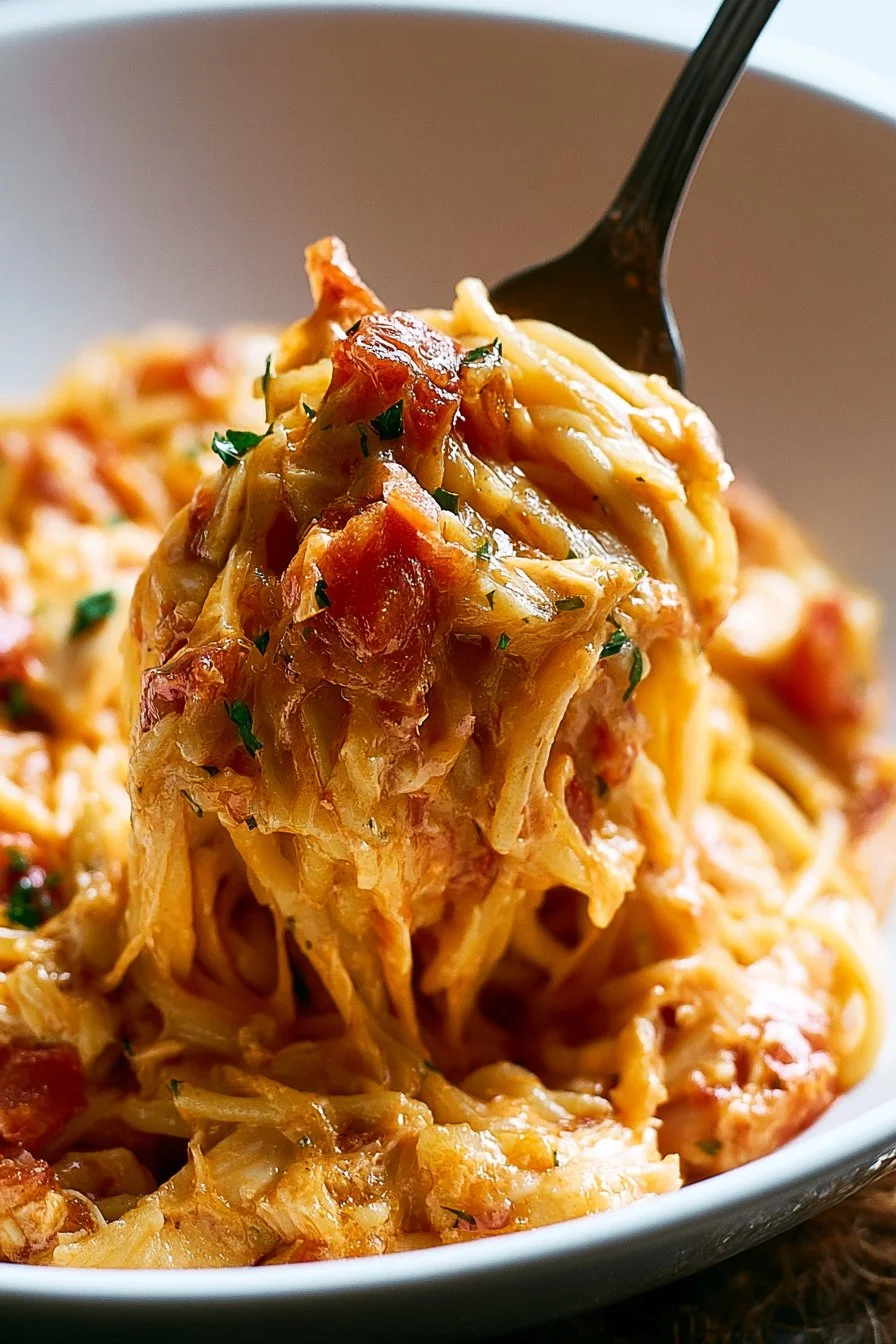

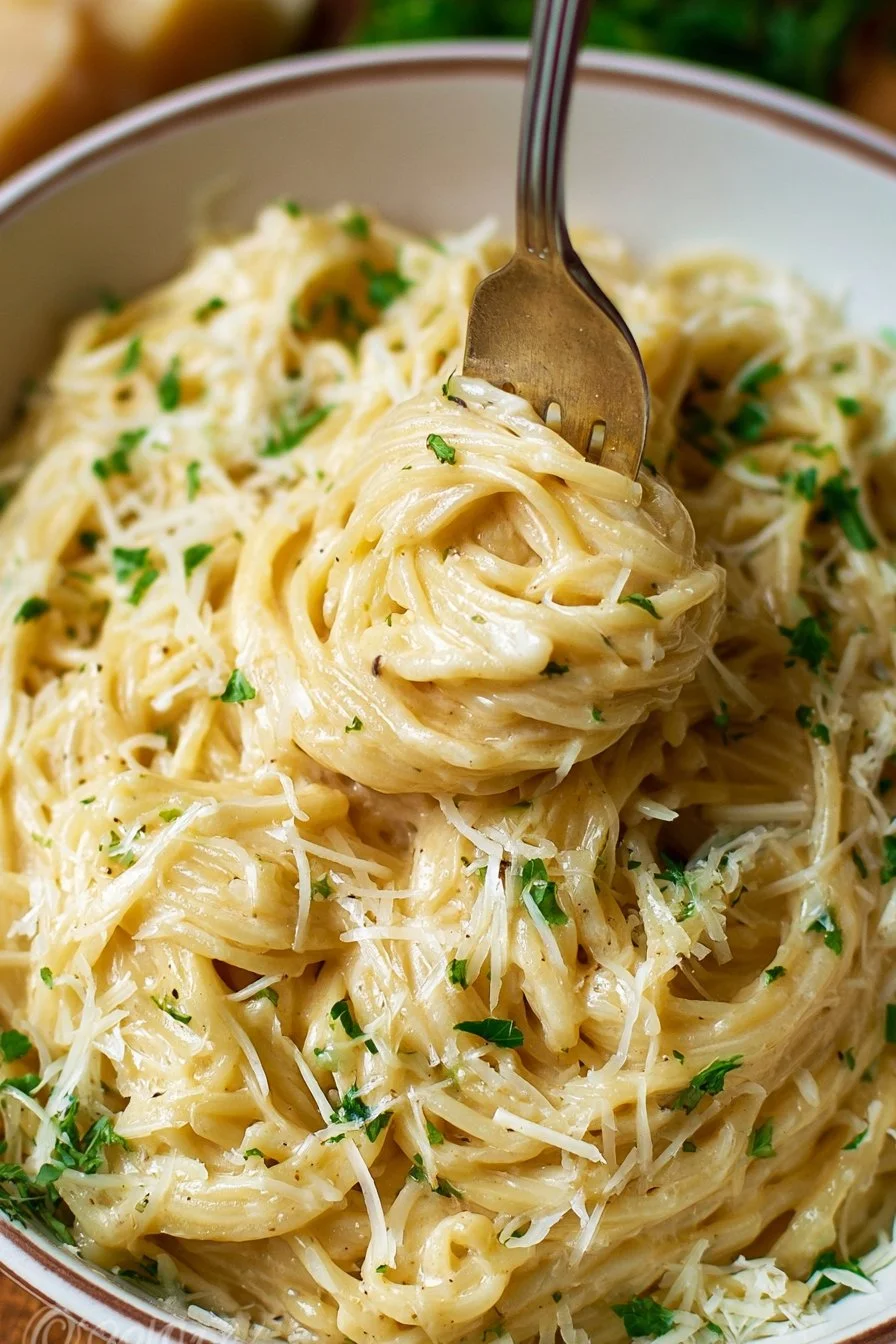
Garlic Parmesan pasta coats tender noodles in a rich sauce made with fresh garlic, heavy cream, and grated Parmesan. A brief sauté in olive oil takes the raw edge off the garlic, while gently melting the cheese keeps the sauce smooth. Toss the pasta through the pan just before serving so every strand gets coated. It works as a meatless dinner or a creamy side with a crisp salad.
With 10 minutes of preparation and about 15 minutes of cooking, garlic Parmesan pasta is a useful weeknight option when you want a short ingredient list. Grate the Parmesan and mince the garlic before heating the pan. The sauce moves quickly once the cream goes in, and gentle heat is the key to keeping the cheese from clumping.
On This Page
Why This Recipe Works
Garlic Parmesan pasta relies on a brief garlic sauté and gentle cheese melting rather than a flour-thickened base. Olive oil carries the garlic flavor, heavy cream gives the sauce body, and finely grated Parmesan adds seasoning and thickness. Keeping the heat low when the cheese goes in makes that combination easier to blend.
Cooking the pasta separately keeps its package timing independent of the sauce. You can bring the two together when the pasta is just tender and the cheese is incorporated. The sauce should coat the noodles; it does not need to stand in a thick mound before you add them.
Ingredients for Garlic Parmesan Pasta
Measure 8 ounces of dry pasta before cooking. Spaghetti and short shapes both work; follow the package directions for the shape you choose. The sauce uses 3 tablespoons olive oil, four minced garlic cloves, 1 cup heavy cream, and 1 cup grated Parmesan. Finely grated cheese blends more readily than large shreds. Taste before salting because Parmesan already seasons the sauce.
- 8 oz pasta
- 3 tbsp olive oil
- 4 cloves garlic, minced
- 1 cup heavy cream
- 1 cup grated Parmesan cheese
- salt and pepper, to taste
- fresh parsley, for garnish
- reserved pasta cooking water, as needed
How to Make Garlic Parmesan Pasta
1. Cook the pasta. Boil the 8 ounces of pasta according to its package directions until al dente. Taste a piece for a tender exterior and slight firmness in the center. Before draining, scoop out 1/2 cup cooking water; a little of that starchy water can loosen the cheese sauce later without requiring more cream.
2. Gently sauté the garlic. Heat the 3 tablespoons olive oil in a large pan over medium heat. Add the minced garlic and stir for about 1 minute, just until fragrant. Watch the color closely; pale, aromatic garlic gives a mellow flavor, while dark garlic can make the entire sauce bitter.
3. Warm the cream. Pour in the 1 cup heavy cream and stir it through the garlic oil. Bring it to a gentle simmer, then lower the heat. You want small bubbles and steady warmth, not a rolling boil that makes it harder to melt the Parmesan evenly.
4. Melt the Parmesan gradually. Add the grated Parmesan in small additions, stirring each one into the warm cream before adding more. Keep the heat low and stir until the sauce looks smooth. Season with pepper, then taste before adding salt. The sauce should flow around the spoon rather than become a stiff paste.
5. Toss and serve. Turn the drained pasta through the sauce with tongs or a broad spoon. If the coating is tight or sticky, add reserved cooking water a tablespoon at a time, tossing after each addition until the sauce flows around the noodles. Remove the pan from the heat once coated and hot; the pasta continues absorbing liquid as it stands. Finish with parsley and serve promptly.
Serving Suggestions
Serve garlic Parmesan pasta right away while the sauce flows around the noodles. Pair it with a crisp salad and bread for a meatless dinner, or offer smaller portions alongside cooked chicken or fish.
A portion of Air Fryer Garlic Bread can pick up extra cream sauce, while Classic Homemade Caesar Salad offers a crisp side.
Storage and Reheating
Refrigerate leftover garlic Parmesan pasta promptly in a shallow covered container. Use the leftovers within 3 to 4 days, and reheat to 165°F. The noodles absorb sauce as they stand, so the chilled pasta will be thicker than it was at dinner. Warm it gently with a small splash of liquid and stir so the sauce loosens without boiling dry.
See FoodSafety.gov reheating guidance for the handling guidance used here.
Tips and Variations
Mince the garlic evenly and stay by the pan during its brief sauté. If it smells scorched or becomes dark brown, restarting that stage gives a better result than trying to hide bitterness under cheese.
Finely grate the Parmesan and add it gradually over low heat. Stir each addition until incorporated before adding the next, rather than dropping the whole cup into boiling cream.
Bring the pasta and sauce together while both are hot, then serve. Spinach or sautéed mushrooms can be added as variations, but cook watery vegetables separately so they do not dilute the cream sauce.
Frequently Asked Questions
Which noodles work best for this cream pasta?
Spaghetti, linguine, and short shapes can all hold this sauce. Use the same dry weight and follow the cooking directions on the pasta package.
Why is the Parmesan clumping?
Large cheese pieces and excessive heat make blending harder. Use finely grated Parmesan, lower the heat, and stir it into the warm cream in small additions.
Can I substitute milk for heavy cream?
Milk is thinner and does not make the same sauce at these quantities. Keep heavy cream for this method; a milk-based sauce needs a separate thickening approach.
Can I add cooked chicken or shrimp?
Yes. Add fully cooked chicken or shrimp as a variation near the finish and heat it appropriately. Cook raw proteins separately before combining them with the pasta.
How can I loosen leftover pasta?
Warm it gently with a small splash of liquid and stir as the sauce loosens. Reheat leftovers to 165°F without letting the pan boil dry.
More Recipe Ideas
For a pasta dinner that includes a protein, compare Creamy Garlic Parmesan Chicken Pasta and Creamy Parmesan Garlic Shrimp Pasta. Each has its own ingredients and cooking method; the basic pasta here stays meatless.
Nutrition is an estimate per serving, calculated from USDA SR Legacy ingredient data. USDA generic dry pasta, heavy cream, and grated Parmesan; all listed olive oil retained. Optional parsley and salt to taste excluded; side dishes excluded.
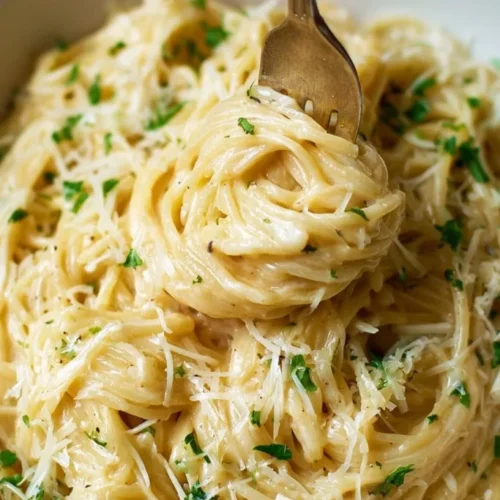
Creamy Garlic Parmesan Pasta
Ingredients
Pasta Ingredients
- 8 oz pasta
- 3 tbsp olive oil
- 4 cloves garlic, minced
- 1 cup heavy cream
- 1 cup grated Parmesan cheese
- salt and pepper, to taste
- fresh parsley, for garnish
- reserved pasta cooking water, as needed Reserve 1/2 cup before draining; add only as needed.
Instructions
Method
- Boil the 8 ounces dry pasta according to its package directions until al dente. Reserve 1/2 cup cooking water, then drain.
- Heat the olive oil in a large skillet over medium heat. Stir in the minced garlic for about 1 minute until fragrant and still pale; lower the heat if it begins to brown.
- Stir in the heavy cream and bring to a gentle simmer, then reduce the heat to low. Avoid a rolling boil.
- Add the finely grated Parmesan in small additions, stirring each one smooth before adding the next. Season with pepper and taste before adding salt.
- Add the drained pasta and toss to coat, loosening with reserved cooking water a tablespoon at a time if needed. Take the skillet off the heat, finish with parsley, and divide into 4 portions.
Notes
- Refrigerate within 2 hours; use within 3–4 days.
- Reheat gently to 165°F with a splash of liquid as needed.