
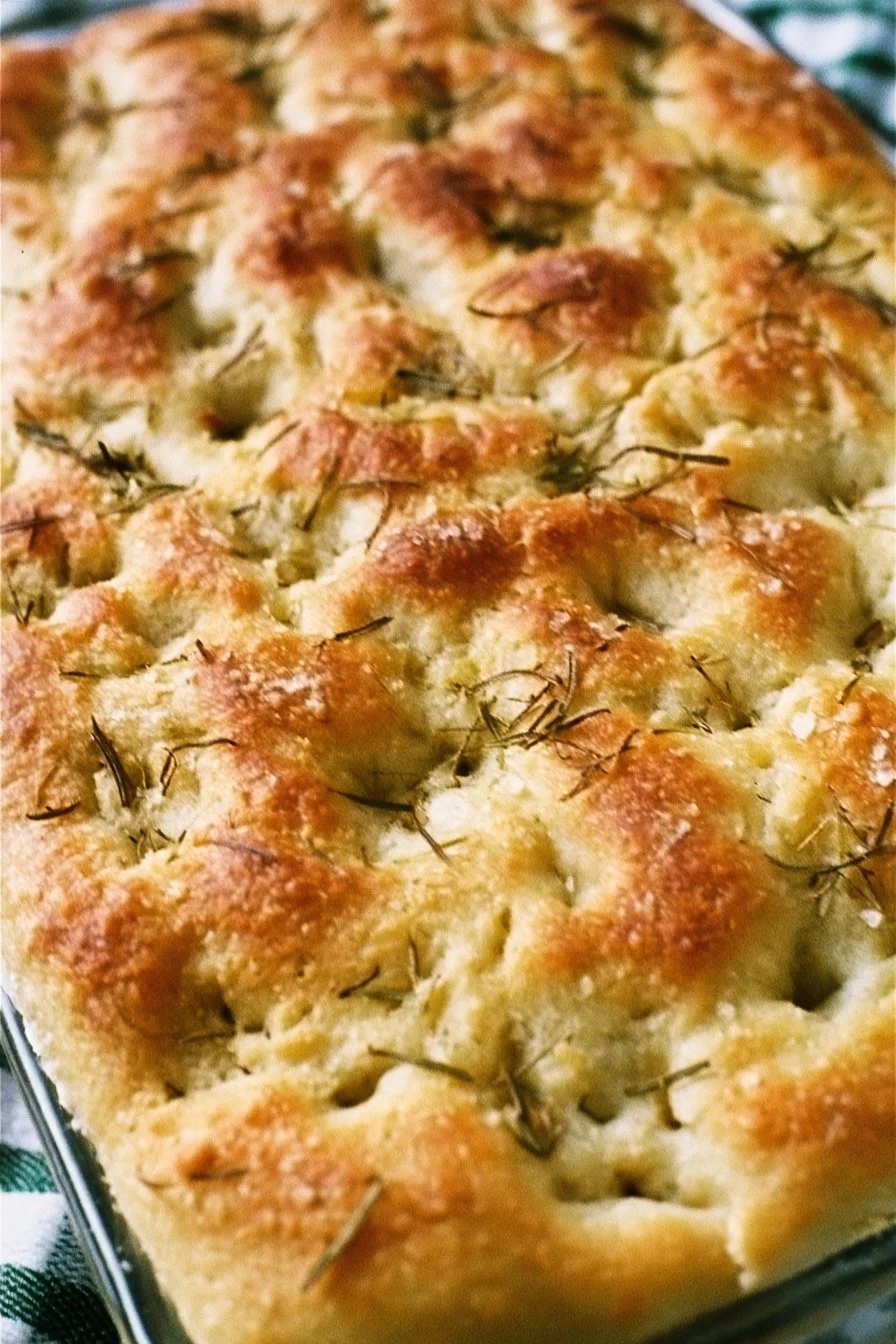
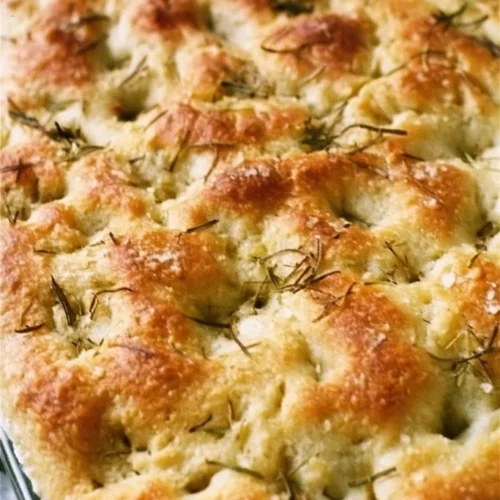
Kneaded rosemary focaccia combines all-purpose flour, yeast, water, and olive oil in a thick pan bread topped with fresh rosemary. The dough is mixed and kneaded briefly before its first rise, then stretched into a nine-by-thirteen-inch pan for a second rest. That extra pan rise helps the dough relax and become airy before baking.
Plan around the dough rather than a fixed one-hour timer. It should expand clearly during the first rise and look puffy in the pan before dimpling. A cool room may extend both stages, while a warmer kitchen can move more quickly.
On This Page
Why This Recipe Works
The measured quarter cup of olive oil goes inside the dough, while separate small amounts coat the pan and surface. Kneaded rosemary focaccia gets browned edges where the dough meets the oiled metal. The surface dimples hold a little oil and keep the bread from becoming one large balloon.
This is a hands-on kneaded method rather than a dough that develops only through several stretch-and-fold sessions. The dough remains tacky; adding enough flour to make it completely dry changes the intended texture. A scraper is useful when moving it between bowl and pan.
Ingredients for Kneaded Rosemary Focaccia
Measure five cups of all-purpose flour lightly, with about 600–625 grams as a practical range depending on the flour. Use a seven-gram packet of active dry yeast, approximately two and a quarter teaspoons. Warm water around 105–110°F supports activation without overheating the yeast.
For kneaded rosemary focaccia, the tablespoon of salt seasons the full large dough batch. The optional surface salt is a small separate sprinkle, not another tablespoon. Chop fresh rosemary leaves away from their woody stems, and measure the extra oil for the bowl, pan, and finishing surface separately.
Dough
- 2 cups warm water (105–110°F)
- 1 7-gram packet active dry yeast (about 2¼ teaspoons)
- 5 cups all-purpose flour (spooned and leveled; about 600–625 grams)
- 1 tablespoon salt
- ¼ cup olive oil
Pan and Topping
- 1 teaspoon extra olive oil (for the bowl)
- 2 tablespoons extra olive oil (for the pan)
- 1 tablespoon extra olive oil (for the surface)
- 1 tablespoon fresh rosemary leaves (finely chopped; woody stems removed)
- ¼ teaspoon coarse salt (optional surface sprinkle)
How to Make Kneaded Rosemary Focaccia
Stir yeast into the warm water and allow about ten minutes for activity. Add flour, salt, and the quarter cup of oil, then mix until no flour pockets remain. Knead in the bowl or with lightly oiled hands for about five to eight minutes, until the mass becomes more elastic while remaining soft.
Cover kneaded rosemary focaccia in a lightly oiled bowl and leave until approximately doubled, about 60–90 minutes. Transfer to the prepared metal pan and stretch gently toward the corners. If it springs back, rest ten minutes before trying again instead of tearing the dough.
Rest for a further 30–45 minutes so the dough looks airy. Once the oven is at 425°F, drizzle the top with the finishing oil, and press oily fingertips into the dough without punching through its base. Add rosemary and the small optional salt sprinkle. Bake for about 20–25 minutes until golden on top and cooked beneath; extend if the center is still doughy. Cool on a rack ten minutes before cutting.
How to Serve
Cut kneaded rosemary focaccia into twelve pieces and offer warm with soup, salad, or roasted vegetables. A serrated knife helps preserve the crumb rather than pressing it flat. The pieces can also be split horizontally for small sandwiches once the interior has settled.
The thick nine-by-thirteen-inch presentation gives a different proportion of crumb to crust from a thin half-sheet bread. A larger pan needs its own earlier baking checks rather than the same timing assumed automatically. Extra dips or sandwich fillings are separate from this bread formula.
Storage
Cool kneaded rosemary focaccia completely before wrapping. Keep at room temperature for up to two days for best texture, or freeze wrapped portions for up to two months for quality. Trapping steam inside a closed container softens the surface.
Warm slices briefly in the oven to refresh the exterior. If freezing, wrap against drying and use a freezer bag around individual portions. Discard bread with mold rather than cutting away one visible area and serving the remainder.
The FDA safe food handling guidance explains prompt refrigeration and temperature checks for perishable foods.
Tips and Variations
A soft dough is normal for kneaded rosemary focaccia. If it sticks, lightly oil your hands rather than repeatedly burying it under flour. Dough that tears and snaps back during stretching often needs a short rest, not more force.
Keep yeast dough out of a hot oven or directly against a heating appliance while rising. Warmth is helpful, but excessive heat damages yeast and can melt the dough’s oil into a greasy surface. Read the visible expansion and puffiness before moving to the next stage.
Frequently Asked Questions
Does kneaded rosemary focaccia need a second rise?
Yes. Let it become puffy in the pan after the bowl rise, then dimple and bake.
Where does the quarter cup of oil go?
Into the dough. Separate measured oil is listed for the bowl, pan, and top.
What if the dough springs back?
Pause for about ten minutes and try stretching gently again. Relaxed dough is easier to move into the corners.
Is the surface salt another tablespoon?
No. The topping is only an optional quarter teaspoon; the tablespoon belongs in the large dough batch.
Can I cut it straight from the oven?
Give it at least ten minutes on a rack so the interior can settle before slicing.
More Recipes to Try
- Rosemary Focaccia with Stretch-and-Fold Dough
- Olive Oil Rosemary No Knead Bread with Instant Pot Proofing
- Creamy Vegetable Soup
- Hearty Bean Vegetable Soup
Kneaded Rosemary Focaccia with All-Purpose Flour
Ingredients
Dough
- 2 cups warm water 105–110°F
- 1 7-gram packet active dry yeast about 2¼ teaspoons
- 5 cups all-purpose flour spooned and leveled; about 600–625 grams
- 1 tablespoon salt
- ¼ cup olive oil
Pan and Topping
- 1 teaspoon extra olive oil for the bowl
- 2 tablespoons extra olive oil for the pan
- 1 tablespoon extra olive oil for the surface
- 1 tablespoon fresh rosemary leaves finely chopped; woody stems removed
- ¼ teaspoon coarse salt optional surface sprinkle
Instructions
- Stir active dry yeast into 2 cups water at about 105–110°F. Rest 10 minutes until active, then mix in flour, tablespoon salt, and ¼ cup oil. Knead gently for 5–8 minutes until more elastic but still tacky.
- Coat a bowl lightly with 1 teaspoon extra oil, add the dough, cover, and let rise for 60–90 minutes or until roughly doubled.
- Oil a 9-by-13-inch metal pan with 2 tablespoons oil. Transfer dough and stretch gently toward the corners. If resistant, rest 10 minutes before stretching again. Cover and allow 30–45 minutes more until puffy.
- Heat the oven to 425°F. Drizzle 1 tablespoon oil over the dough and press oiled fingertips into it to make deep dimples without tearing through. Scatter chopped rosemary and optional ¼ teaspoon coarse salt over the surface.
- Bake for 20–25 minutes until golden above and beneath, extending if needed for a fully baked center. Transfer to a rack and cool 10 minutes before cutting into 12 pieces.