
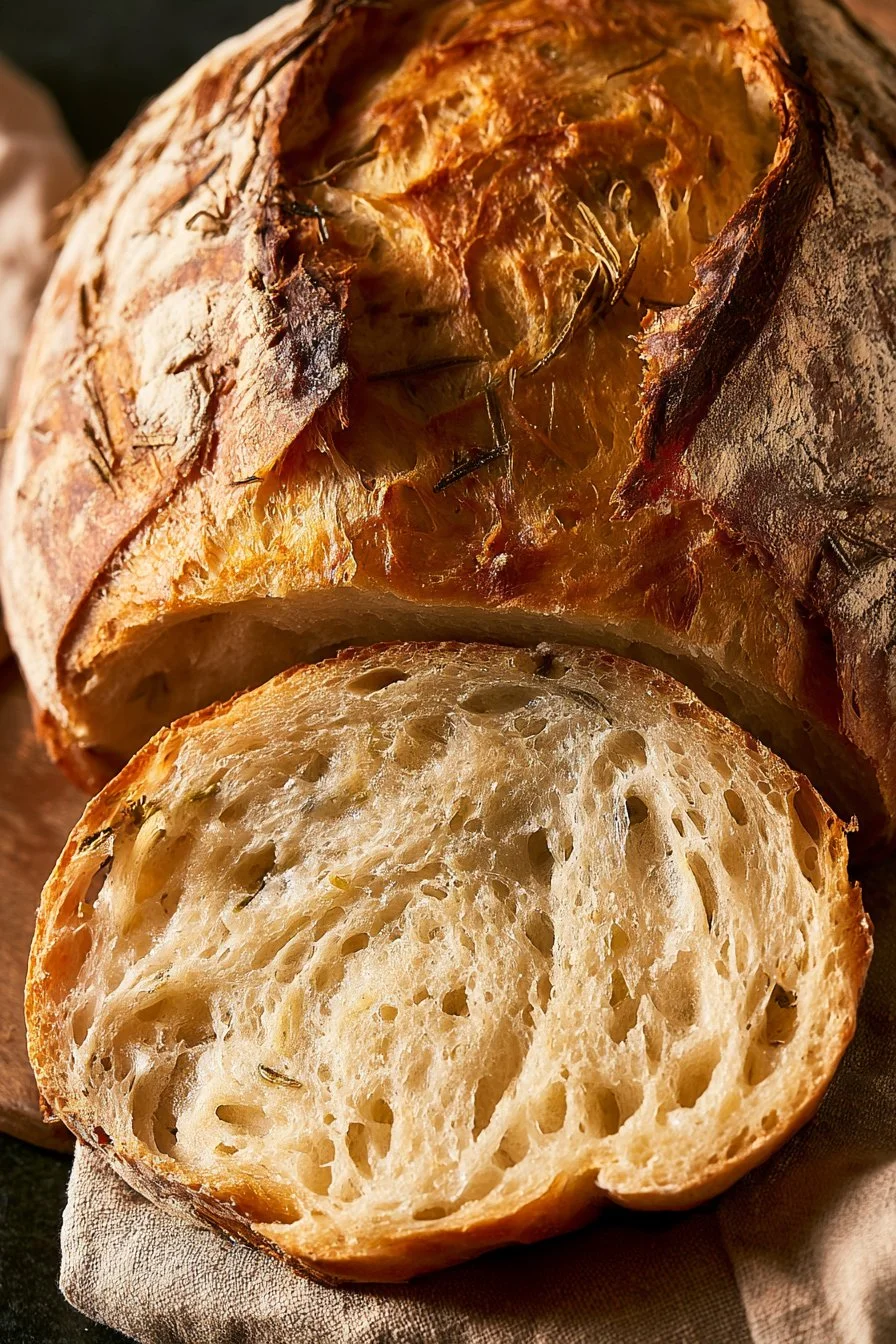
Rosemary no knead bread uses olive oil, fresh herbs, and a sticky yeast dough to make one round loaf with a crisp exterior. The Instant Pot provides a warm place for the first rise; the bread itself is baked in a Dutch oven. You need a model with a suitable yogurt setting, along with oven-safe cookware rated for 450°F.
Most of the schedule is hands-off. Allow roughly four hours for the warm rise, another half hour after shaping, and an hour of cooling after baking. Dough expansion and a thoroughly baked center matter more than an exact clock, especially if your kitchen or appliance runs cooler.
On This Page
Why This Recipe Works
Olive oil softens the interior while a covered pot retains moisture during the beginning of the bake. Removing the lid near the end lets the surface color and dry. Rosemary no knead bread therefore needs both stages: leaving the cover on throughout produces a paler crust, while starting uncovered can harden the outside before the loaf expands.
The dough is intentionally sticky. It becomes easier to handle as it rests, so avoid correcting every tacky patch with more flour. A lightly floured surface and quick folds are more useful than kneading until the dough feels dry.
Ingredients for Rosemary No Knead Bread
Bread flour gives this wet dough structure. Spoon it into the cup and level it rather than packing the cup. Measure the oil separately from the water, and finely chop the fresh rosemary so the herb is distributed through the loaf. Keep any extra garnish modest rather than adding woody sprigs.
For rosemary no knead bread, use warm water around 105°F to activate the active dry yeast. Water should not be hot. If the mixture shows no activity after its initial rest, check the yeast before committing to the long rise. The optional water is only for dry patches that resist mixing; do not add it automatically.
Dough
- 3 cups bread flour (spooned and leveled)
- 1¼ teaspoons active dry yeast
- 1¼ teaspoons salt
- 1 teaspoon sugar
- 1½ cups warm water (about 105°F)
- 2 tablespoons fresh rosemary (finely chopped)
- ¼ cup extra virgin olive oil
For Handling
- 1–2 tablespoons additional water (only if dry flour remains)
- as needed extra flour (for light dusting)
- as needed oil (for lightly coating the proofing paper)
How to Make Rosemary No Knead Bread
Mix the yeast bath first, then incorporate the flour, salt, rosemary, and measured olive oil. Scrape the bowl so no loose flour remains beneath the dough. Its surface will look rough rather than smooth, and it should hold together as a soft, sticky mass instead of pouring like batter.
Proof rosemary no knead bread on the appliance yogurt Normal setting, using a loose glass lid rather than a sealed pressure lid. Do not select sauté, pressure cooking, or the yogurt boiling program. Line the insert only for this gentle warming stage. Check the manual because temperature controls differ between models. Look for an expanded dough with visible bubbles after about four hours; allow more time if it has not risen.
Transfer onto a lightly floured surface and fold the edges inward to form a round. The second rest happens while the Dutch oven preheats. Use fresh parchment explicitly rated for 450°F if lifting the dough with paper; ordinary paper may have a lower limit. Bake covered for 30 minutes, then uncovered for 10–15 minutes until well colored and baked through. A center reading around 200–210°F is a useful additional cue.
How to Serve
Let rosemary no knead bread cool on an uncovered rack for at least an hour before slicing. The interior continues to settle after it leaves the oven. Cutting immediately can compress the crumb and release steam that would otherwise stay inside. Use a serrated knife and a steady sawing motion.
One loaf gives about twelve slices, depending on thickness. Serve alongside vegetable soup, use thin slices for toast, or offer it with a small dish of olive oil. These accompaniments are separate from the dough formula and need their own preparation time.
Storage
Once completely cool, wrap rosemary no knead bread and keep it at room temperature for up to two days for best texture. A paper bag keeps the crust drier for the first day; a closed container preserves the interior but softens the crust. Do not seal a steaming loaf.
Freeze wrapped slices for up to two months for quality, with a freezer bag around the individual wrapping. Toast directly from frozen or thaw covered at room temperature. Discard bread with mold rather than trimming the affected spot.
Formula and warm-proofing method adapted from Dhwani Mehta’s Olive Oil Rosemary No Knead Bread at Cooking Carnival. The loaf is baked in the oven, with added guidance for appliance settings and safe cookware handling.
The FDA safe food handling guidance explains prompt refrigeration and temperature checks for perishable foods.
Tips and Variations
For rosemary no knead bread, choose cookware whose pot, lid, and knob can all tolerate the stated oven temperature. Handle the preheated pot with dry oven mitts and keep the hot lid away from the edge of the counter. A heavy pot can cause serious burns even when it looks unchanged.
If you lack an appropriate yogurt setting, use a separate room-temperature no-knead method rather than assuming the four-hour schedule works on a different program. Extra cheese or olives change moisture and salt, so they are not included in this written version.
Frequently Asked Questions
Does rosemary no knead bread bake inside the Instant Pot?
No. The appliance is used for the first rise only. The covered oven bake is what creates the finished loaf and its crust.
Can I use the pressure lid?
Use a loose glass lid for proofing. This is a warming process without pressure, and expanding dough must not contact a sealed valve.
Why is the dough so sticky?
The measured water creates a wet dough that develops during the long rest. Dust the handling surface lightly instead of adding flour until it becomes stiff.
When can I slice rosemary no knead bread?
Wait until the loaf has cooled for at least an hour and the interior has settled. A warm center may need additional cooling.
What if my paper is rated only to 425°F?
Do not put it in a 450°F oven. Use paper and cookware suitable for the recipe temperature or an appropriate paper-free transfer technique.
More Recipes to Try
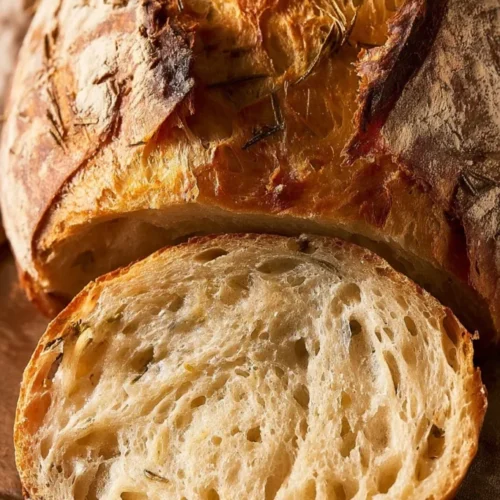
Olive Oil Rosemary No Knead Bread with Instant Pot Proofing
Ingredients
Dough
- 3 cups bread flour spooned and leveled
- 1¼ teaspoons active dry yeast
- 1¼ teaspoons salt
- 1 teaspoon sugar
- 1½ cups warm water about 105°F
- 2 tablespoons fresh rosemary finely chopped
- ¼ cup extra virgin olive oil
For Handling
- 1–2 tablespoons additional water only if dry flour remains
- as needed extra flour for light dusting
- as needed oil for lightly coating the proofing paper
Instructions
- Stir the yeast and sugar into the 1½ cups water at about 105°F. Leave for 10 minutes; proceed when the surface becomes foamy.
- Add the bread flour, salt, finely chopped rosemary, and ¼ cup olive oil. Stir and scrape until a shaggy, sticky dough forms. If flour remains dry, mix in additional water 1 tablespoon at a time, up to 2 tablespoons.
- Line the Instant Pot insert with parchment and lightly oil the paper. Add the dough and cover loosely with a glass lid. Select yogurt Normal, without pressure, for about 4 hours or until the dough has expanded substantially and shows bubbles. Do not use sauté or yogurt Boil.
- Lightly flour a work surface, turn out the dough, and fold its edges toward the center to form a round. Place on fresh parchment rated for 450°F and cover loosely for 30 minutes. Meanwhile preheat the oven and a lidded 3½–5-quart Dutch oven to 450°F, checking all cookware temperature limits.
- With dry mitts, remove the heated pot and lid. Score the loaf about ½ inch deep, carefully lower it into the pot, and replace the cover. Bake on the middle rack for 30 minutes.
- Uncover and continue baking for 10–15 minutes until deeply golden, with a fully baked center around 200–210°F. Lift out carefully and cool uncovered on a rack for at least 60 minutes before cutting.