
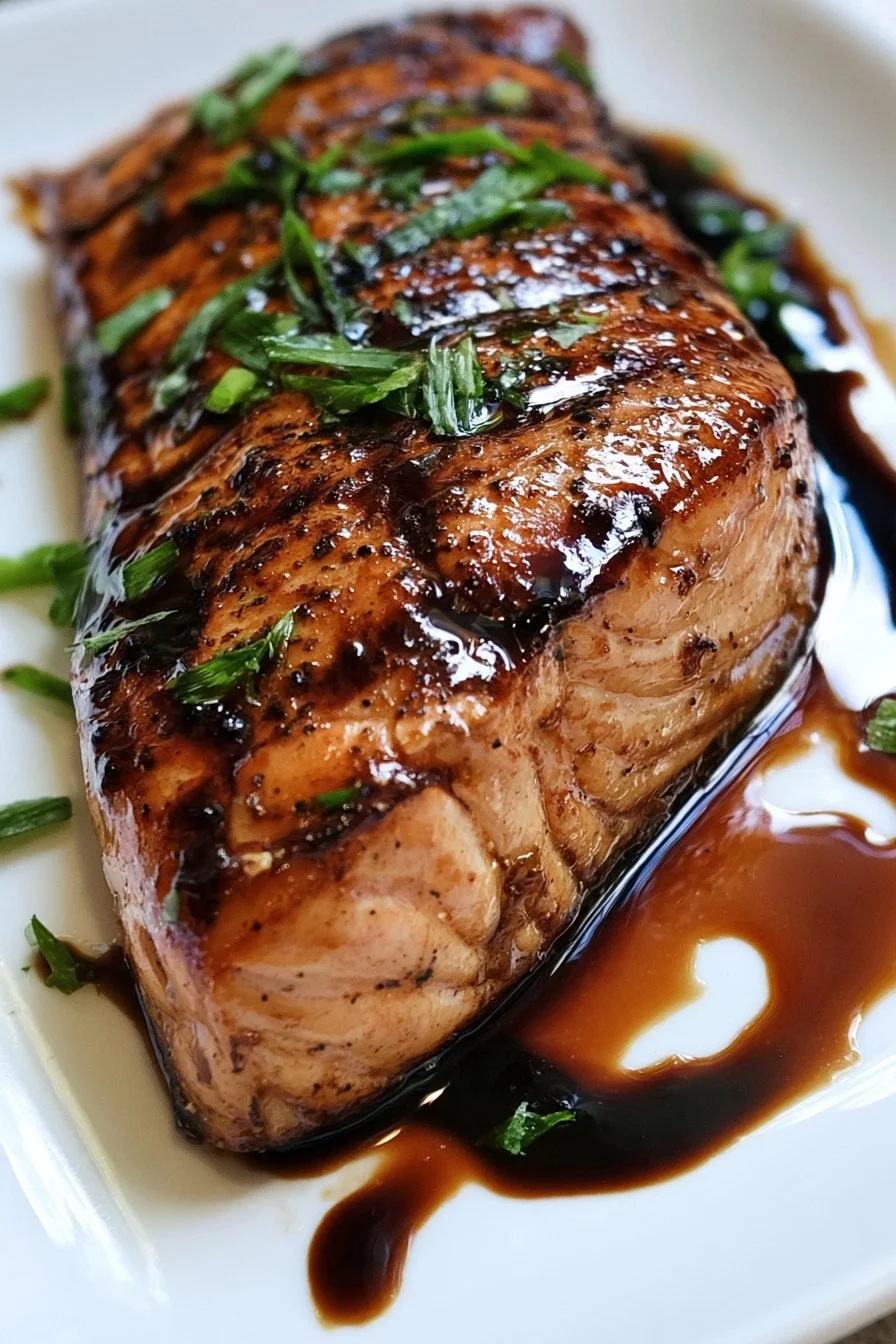
Balsamic glazed salmon uses a sweet and tangy sauce made with brown sugar, balsamic vinegar, Dijon mustard, and garlic. Half flavors the raw fish during a short refrigerated marinade, while the other half stays separate for finishing the cooked portions.
One pound of salmon makes four small portions or two larger mains. Balsamic glazed salmon does not need an overnight marinade: thirty minutes is enough for this method. The total time includes that pause as well as preparation and baking.
On This Page
Why This Recipe Works
The brown sugar softens the vinegar’s sharpness, and mustard helps bring the sauce together. A brief gentle reduction of the clean reserved portion gives it a more syrupy finish without needing a separate starch thickener.
For balsamic glazed salmon, the sauce is divided before it touches raw seafood. That order is essential. A bowl that has held raw fish is not a suitable source of finishing sauce, and the used marinade is discarded rather than poured over the cooked salmon.
Ingredients for Balsamic Glazed Salmon
Choose a one-pound salmon fillet or four similar-sized pieces, fully thawed if originally frozen. Uneven thickness makes timing less predictable, so check the thicker part of each piece. Skin-on portions can be baked with the skin underneath.
Balsamic glazed salmon uses either one teaspoon of minced garlic or a quarter teaspoon of garlic powder. The two amounts are alternatives, not a request to double the garlic. Keep the measured red pepper flakes for a gentle kick, or leave them out if you prefer a milder sauce.
Worcestershire sauce adds savory flavor and may contain anchovy, depending on the product. Check its label when dietary restrictions matter. Plain balsamic vinegar is used here; a bottled thick balsamic glaze has a different sugar concentration.
Sauce, divided before marinating
- 1/4 cup brown sugar
- 1/4 cup balsamic vinegar
- 2 teaspoons Dijon mustard
- 1 teaspoon garlic, minced (or use 1/4 teaspoon garlic powder instead, not both)
- 1/4 teaspoon red pepper flakes
- 1/2 tablespoon Worcestershire sauce
For the salmon
- 1 lb. salmon fillet (four small 4-oz portions, or two larger servings; thawed if frozen)
- to taste Salt and pepper
How to Make Balsamic Glazed Salmon
Mix the sauce until the sugar is mostly dissolved, then put half in a separate clean container. Coat the salmon with the remaining half and refrigerate for thirty minutes. Preheat the oven near the end of that time rather than leaving the fish on the counter to warm.
Lift the fish onto a foil-lined baking dish or sheet, letting excess marinade drain away. Discard the used liquid. Bake balsamic glazed salmon at 350°F for roughly fifteen to twenty minutes, until the thickest part reaches 145°F. Thickness and starting temperature can extend the timing.
While the fish bakes, gently simmer the clean reserved sauce in a small saucepan for about one to three minutes, just until it lightly coats a spoon. Watch closely because a small sugary quantity can reduce quickly. It thickens further as it loses heat.
Spoon the glaze over balsamic glazed salmon after baking. This method avoids returning a fish-contact brush or spoon to the clean finishing sauce. Use a clean serving utensil and plate for the cooked fish.
How to Serve
Serve balsamic glazed salmon with steamed vegetables, rice, or potatoes prepared separately. The sauce is concentrated, so a small drizzle is enough to carry the flavor across a portion.
For four servings, the fish portions are modest, about four ounces each before cooking. Two diners wanting larger fish portions can split the same recipe differently; changing the serving count does not require multiplying the marinade ingredients.
Storage
Refrigerate balsamic glazed salmon promptly, within two hours, in a shallow covered container. Use the leftovers within three days. Keep any remaining clean glaze separately so it is easier to add only what a portion needs.
Reheat a refrigerated portion gently until it reaches 165°F throughout. Long reheating can dry the fish, so check it rather than repeatedly heating a whole dish. For longer storage, freeze cooled portions for about one month and thaw in the refrigerator.
Adapted from The Cooking Jar’s Balsamic Glazed Salmon formula and oven method, with newly written steps that separate the finishing sauce and include the marinade in total time. For seafood handling and doneness, see the FDA’s seafood safety guidance.
Tips and Variations
If balsamic glazed salmon’s sauce becomes too thick, remove it from the heat and stir in a teaspoon of water. That is a texture adjustment to the reserved sauce, not a reason to reuse the raw marinade.
If a thin end cooks before a thicker center, separate the portions and remove each as it reaches the target temperature. Dark sauce color alone does not confirm that the fish is cooked; a thermometer gives a clearer check.
Frequently Asked Questions
Can balsamic glazed salmon marinate overnight?
This acidic marinade is intended for a short thirty-minute refrigerated rest. A long soak changes the fish texture and is not required.
Do I use both forms of garlic?
No. Choose the minced garlic or the smaller garlic-powder amount listed as its alternative.
Can the raw marinade become the final drizzle?
This method discards it. Reserve a clean half before adding the fish, then use only that reserved portion for the finishing glaze.
What temperature should the salmon reach?
Check for 145°F in the thickest part. The fifteen-to-twenty-minute bake is an estimate, especially when portions differ in thickness.
How many main servings does a pound make?
It makes four small fish portions or two larger ones. Choose your serving split based on the rest of the meal.
More Recipes to Try
Balsamic Glazed Salmon
Ingredients
Sauce, divided before marinating
- 1/4 cup brown sugar
- 1/4 cup balsamic vinegar
- 2 teaspoons Dijon mustard
- 1 teaspoon garlic, minced or use 1/4 teaspoon garlic powder instead, not both
- 1/4 teaspoon red pepper flakes
- 1/2 tablespoon Worcestershire sauce
For the salmon
- 1 lb. salmon fillet four small 4-oz portions, or two larger servings; thawed if frozen
- to taste Salt and pepper
Instructions
- Stir together the sauce ingredients, choosing minced garlic or its powder alternative. Separate half into a clean container before handling the fish.
- Coat salmon with the other half and refrigerate for 30 minutes. Heat the oven to 350°F near the end of the marinade period.
- Place drained salmon on a foil-lined baking dish, skin-down if present. Throw away fish-contact marinade. Bake 15–20 minutes or as needed to reach 145°F at the thickest point.
- Meanwhile, simmer the untouched reserved sauce gently in a small pan for 1–3 minutes until slightly syrupy; avoid boiling it dry.
- Plate the cooked portions with clean utensils and spoon on the reserved glaze. Refrigerate leftovers within 2 hours.