
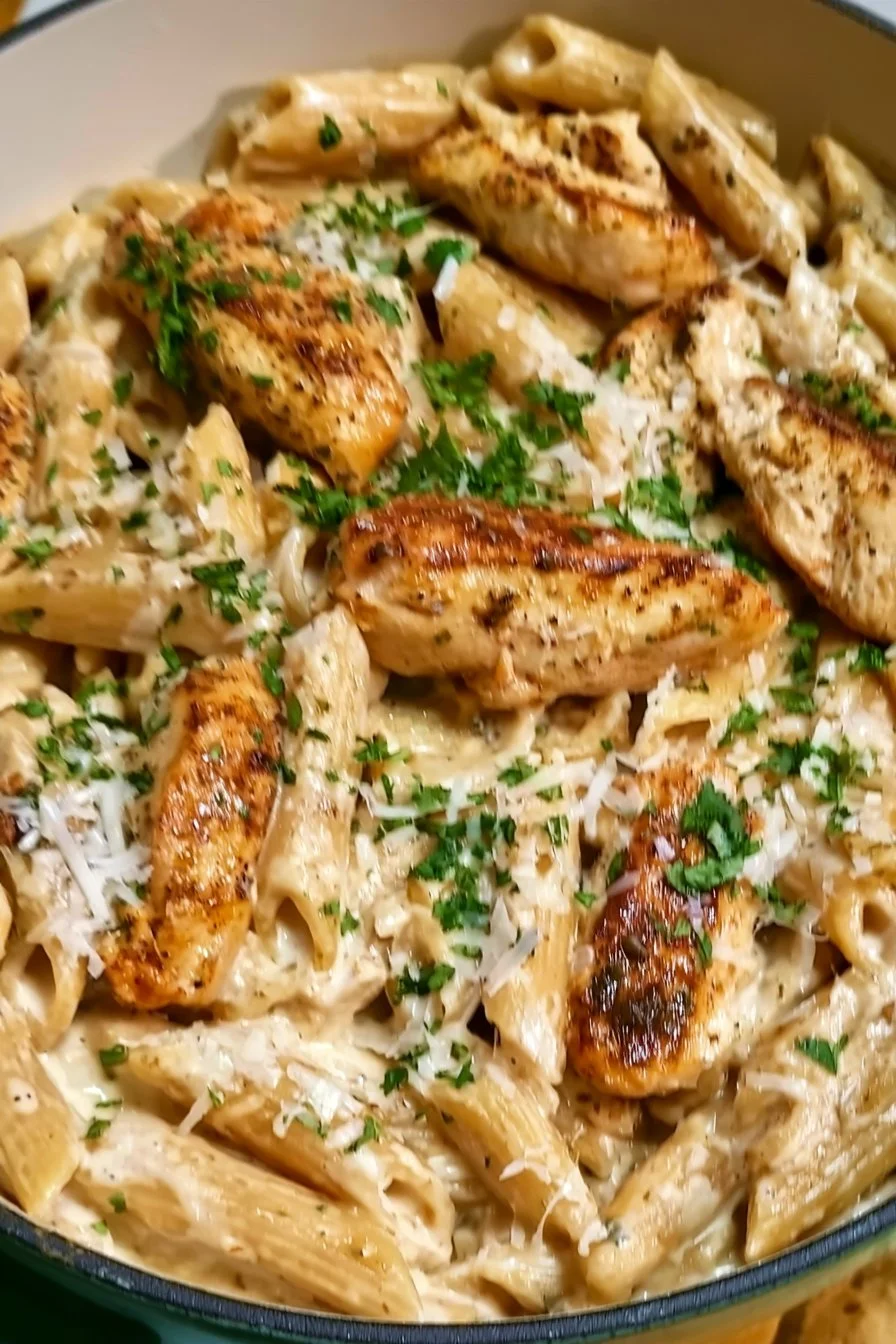
Parmesan chicken penne pairs sliced chicken breasts with pasta in a garlic, cream, and chicken broth sauce. Olive oil is used to brown the whole breasts, and Parmesan brings salt and body to the sauce. The penne is boiled and drained before it joins the chicken, so you can cook it to the texture you prefer without relying on the sauce to hydrate dry pasta.
You can reuse the pasta pot after draining, though that makes the stages sequential. Plan around 50 minutes for that approach, with extra time for unusually thick breasts. The sauce contains 2 cups of broth and 1 cup of cream, giving this version a generous, relatively loose coating. It does not need flour or a separate roux.
On This Page
Why This Recipe Works
Boiling the penne first gives it a clear endpoint before the chicken and dairy enter the pot. Stop at the package’s al dente stage, because the pasta will warm again in the sauce. Shaking off excess water helps keep the measured broth and cream from becoming even more diluted.
The browned bits left by the chicken season the broth when you scrape the bottom. Garlic goes in after the chicken, so it can become fragrant without spending the entire browning stage in hot oil. Parmesan is added off the heat in small portions. A hard boil after the cheese goes in can make the sauce less smooth.
Ingredients for Parmesan Chicken Penne
The penne starts with 8 ounces of dry penne and two whole boneless, skinless breasts. Breast size affects how much chicken each of the four portions contains. Grate the Parmesan finely for easier melting. Use both cups of broth and reduce it briefly before adding the cream; the finished sauce will remain loose.
- 8 oz penne pasta
- 2 boneless, skinless chicken breasts
- 2 tablespoons olive oil, divided
- 2 cups chicken broth
- 1 cup heavy cream
- 1 cup Parmesan cheese, finely grated
- 2 cloves garlic, minced
- Salt and pepper, to taste
- fresh parsley, to taste, chopped for garnish
How to Make Parmesan Chicken Penne
Boil the penne to al dente according to the package, then drain. The pasta-first method lets you reuse the pot, but dry its surface before adding oil so water does not interfere with browning. Have the sauce ingredients nearby to keep the drained pasta’s waiting time short.
Reserve one tablespoon of olive oil for the garlic and use the other over medium heat to brown the seasoned breasts. Start checking around 6–7 minutes per side and lift each piece out at 165°F in its thickest part. The cooked meat can rest while you build the sauce, avoiding a second cooking stage in the broth.
Add the reserved tablespoon of oil over medium-low heat and stir the garlic for about a minute, just until fragrant. Pour in both cups of broth, loosening any browned bits, and simmer gently to reduce it a little before adding the cream. With this amount of liquid, expect a generous, loose sauce rather than a thick gravy; a brief reduction adjusts it without requiring a flour thickener.
Take the pot off the burner and stir in finely grated Parmesan gradually. Toss the penne through the warm sauce, then fold in sliced chicken and its collected juices. This order coats the noodles while keeping the finished breasts out of another simmer. Add parsley and share the pasta and chicken evenly among four servings.
How to Serve
Serve Parmesan chicken penne in shallow bowls that hold the extra sauce. Divide the chicken slices among the four portions rather than leaving most of them on top of one serving. A crisp green salad provides a lighter contrast, and bread is useful if you want to pick up the remaining garlic broth sauce.
If dinner is not quite ready, hold the cooked pasta and finished sauce separately for better texture, with safe temperature control. Mixing them long before serving lets the penne soak up liquid and continue softening. Once combined, bring the meal to the table promptly rather than repeatedly simmering the chicken and cheese sauce.
Storage and Reheating
Store the penne in shallow, covered containers at 40°F or below. Refrigerate within 2 hours, or 1 hour when the surrounding temperature exceeds 90°F. Use within 3–4 days. For planned leftovers, packing individual portions makes them easier to heat evenly than one deep container of pasta and chicken.
Reheat to 165°F, using gentle heat and stirring to warm the center. A splash of water or broth can loosen sauce that has thickened during storage. Microwave portions covered, stirring partway through. The penne becomes softer after storage, and freezing may leave the dairy sauce separated even after careful reheating.
See FoodSafety.gov guidance for safe cooking and food handling.
Tips and Variations
For a smoother coating, finely grate the cheese and take the pot off the heat before adding it. Stir steadily instead of dumping it into boiling cream all at once. If the broth remains very loose, reduce it before introducing the dairy. Avoid prolonged boiling after the pasta is combined, which concentrates salt and softens the penne.
As a variation, thaw frozen breasts in the refrigerator before cooking. Half-and-half gives a thinner sauce than heavy cream and needs especially gentle heat; it is a variation rather than an identical replacement. For a dairy-free variation, replace both the cream and Parmesan. Gluten-free pasta also requires checking the broth, cheese, and seasonings, and following that pasta’s cooking instructions.
Frequently Asked Questions
Does the dry penne cook in the sauce in Parmesan chicken penne?
No. Boil and drain the penne first, then add it to the finished sauce with the sliced cooked chicken.
Can I use one pot for every stage for Parmesan chicken penne?
Yes. Drain the pasta and dry the pot before browning chicken. This reduces equipment but makes the cooking stages sequential, so allow the full planning time.
Why is the sauce thin?
This version has 2 cups broth plus cream. Briefly reduce the broth before adding dairy, and toss with the penne; it is a generous coating rather than a dense roux sauce.
How do I check the chicken for doneness?
Check each thickest part for 165°F. Thickness changes the cooking time, and browning or clear-looking juices alone are not reliable checks.
Can I freeze the finished pasta?
You can freeze portions after safe cooling, but the penne will soften and the cream sauce may separate. Thaw in the refrigerator and reheat to 165°F.
More Recipe Ideas
For cubed chicken with a richer garlic cream sauce, see Creamy Garlic Parmesan Chicken Pasta.
For a butter-based chicken pasta, try Garlic Butter Chicken Pasta with Parmesan and Parsley.
For a citrus cream sauce, explore Creamy Lemon Chicken Pasta with Parmesan and Parsley.
For mushrooms in the skillet, try Chicken Mushroom Pasta with Creamy Garlic Parmesan Sauce.
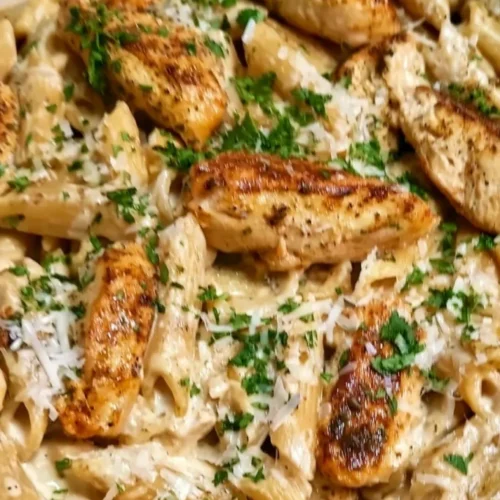
Parmesan Chicken Penne with a Creamy Garlic Broth Sauce
Ingredients
Main ingredients
- 8 oz penne pasta
- 2 boneless, skinless chicken breasts
- 2 tablespoons olive oil divided
- 2 cups chicken broth
- 1 cup heavy cream
- 1 cup Parmesan cheese finely grated
- 2 cloves garlic minced
- Salt and pepper to taste
- fresh parsley to taste, chopped for garnish
Instructions
Instructions
- Boil the penne in salted water according to the package until al dente; drain. If using the same pot for the chicken, dry it before adding oil.
- Season the breasts with salt and pepper; heat 1 tablespoon olive oil over medium heat. Cook for about 6–7 minutes per side, continuing as needed until each thickest part reaches 165°F; transfer to a plate.
- Add the remaining 1 tablespoon olive oil over medium-low heat and cook the garlic for about 1 minute until fragrant. Pour in both cups of broth and gently simmer to reduce slightly, then stir in the cream until hot.
- Remove from the heat and gradually stir in the Parmesan until melted; toss in the penne. Slice the chicken, fold it and its juices into the pasta, garnish with parsley, and divide into 4 servings.
Notes
- Refrigerate within 2 hours (1 hour above 90°F) at 40°F or below; use within 3–4 days.
- Reheat portions to 165°F throughout.