
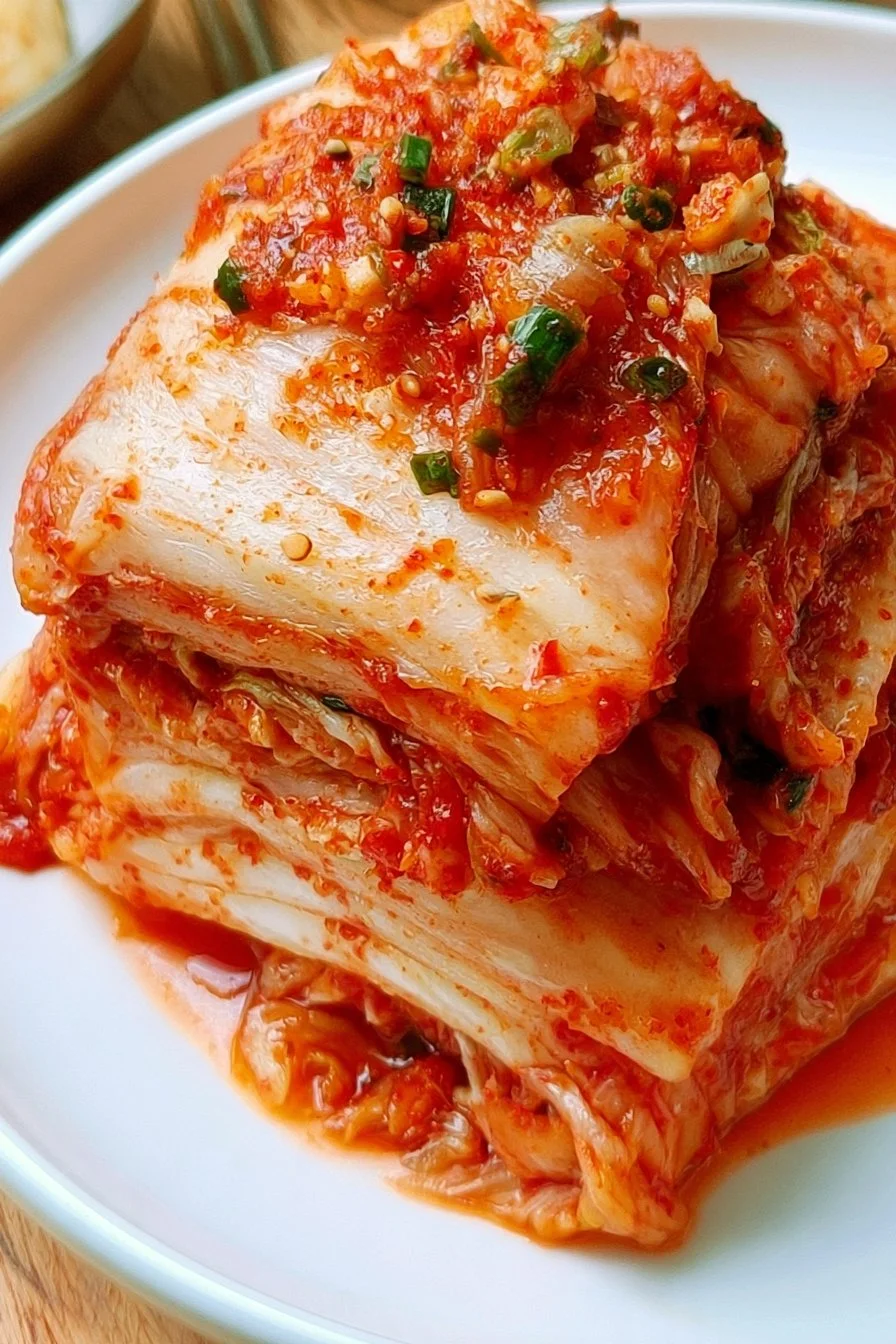
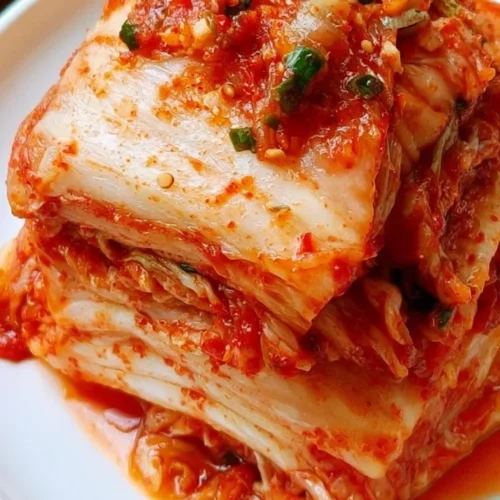
Napa cabbage kimchi is a Korean fermented vegetable side with a spicy red-pepper coating and a gradually developing tang. This large batch combines cabbage, radish, carrot, and chives with an apple-sweetened paste.
On This Page
Why This Recipe Works
Salting softens the thick ribs so the cabbage can be coated and packed closely. Cooked rice flour gives the seasoning enough body to cling to the vegetables, while garlic, ginger, and fish sauce bring pungent, savory flavor. Fermentation changes the flavor over several days; the cabbage should still have a bite.
Ingredients
Choose firm Napa cabbage with fresh inner leaves and coarse, non-iodized salt. Gochugaru is Korean red-pepper powder for kimchi, not ordinary chili powder. Use sweet rice flour for the porridge, and julienne the radish and carrot thinly enough to mingle with the cabbage. The measured salting salt is rinsed away before the paste goes in.
Cabbage and Salting
- 8 pounds Napa cabbage
- 2 cups coarse non-iodized salt, for salting and rinsing off
Seasoning Paste
- 1 1/2 cups water
- 1/3 cup sweet rice flour
- 1 large apple, peeled, cored, and chopped
- 1 large onion, peeled and chopped
- 20 garlic cloves, peeled
- 1 2-inch piece fresh ginger, peeled and sliced
- 1/2 cup fish sauce
- 2 cups gochugaru, divided
Filling Vegetables
- 1 pound Korean radish, julienned
- 6 ounces carrot, julienned
- 4 ounces Asian chives, cut into 1-inch pieces
How to Make Napa Cabbage Kimchi
1. Soften the cabbage. Quarter the washed heads, remove tough cores, and cut the leaves into roughly two-inch pieces. Toss the damp cabbage with the salting salt in a large food-safe bowl. Leave it covered for about two hours, turning it every 30 minutes; thick ribs should bend without snapping. Firmer cabbage may need longer, so use that texture cue rather than stopping with rigid stems.
2. Cook and cool the porridge. Whisk the rice flour into the measured water while it is still cool. Heat over medium, stirring along the bottom, until the mixture bubbles and becomes a thick, translucent paste, about five to ten minutes. Transfer it to a shallow bowl to cool during the salting period. A hot paste would wilt the filling vegetables and warm the packed cabbage.
3. Build the coating. Blend the peeled apple, onion, garlic, ginger, and fish sauce until smooth, then stir in the cooled porridge. Mix one cup of gochugaru into the paste and the other cup with the radish, carrot, and chives. Combining both mixtures spreads the pepper through the whole batch without leaving dry pockets.
4. Rinse and pack. Wash the salted cabbage in three or four changes of cold water, then drain in a colander for at least half an hour. Mix it thoroughly with the seasoning and vegetables, wearing food-safe gloves if desired. Press into clean glass or food-safe plastic fermentation containers, filling only about two-thirds of each container. Keep the vegetables pressed into their juices and use lids that can release fermentation gas.
5. Ferment in the refrigerator. Put the containers on a tray in a refrigerator at 40°F or colder. Allow roughly three to four days for the flavor to develop, checking daily and using a food pH test strip according to its directions. The pH must reach 4.6 or lower before eating; time and sour flavor alone do not confirm that endpoint. Continue refrigerated fermentation if it has not reached that level. The total-time estimate includes four days, plus salting and draining.
How to Serve
Snip or spoon a small portion into a side dish alongside steamed rice and Korean beef or chicken. A little of the tangy liquid can season fried rice, but taste before adding other salty sauces. Keep the main container cold and take out only what you plan to serve.
Storage
Keep the finished batch refrigerated and pressed below its juices; use clean utensils for each serving. Enjoy within two weeks for the best texture, and discard any batch that develops surface mold. Fermentation continues to change the flavor even after it becomes ready to eat. See kimchi fermentation guidance from CSU Extension.
Tips and Variations
- Use containers that fit comfortably in the refrigerator and have room for bubbling.
- A blender can process the aromatics in batches; scrape it out so all the seasoning reaches the bowl.
- For a vegetarian version, choose a recipe formulated with a fish-free seasoning rather than simply omitting the fish sauce.
Frequently Asked Questions
Is this a small batch?
No, it starts with eight pounds of cabbage plus other vegetables. Have several fermentation containers ready before you begin.
Can I use ordinary red-pepper flakes?
They have a different heat level and texture. Look for gochugaru labeled for kimchi for the intended coating.
Does the rice flour go in raw?
It is cooked into porridge first. Let it lose all its heat before combining it with the seasoning.
Why does the container need extra space?
The contents can bubble and expand as they ferment. A tightly filled jar can overflow.
Can I use daikon?
Daikon can stand in for Korean radish. Cut it into fine matchsticks rather than thick chunks.
More Recipe Ideas
Kimchi (Napa Cabbage Kimchi)
Ingredients
Cabbage and Salting
- 8 pounds Napa cabbage
- 2 cups coarse non-iodized salt for salting and rinsing off
Seasoning Paste
- 1 1/2 cups water
- 1/3 cup sweet rice flour
- 1 large apple peeled, cored, and chopped
- 1 large onion peeled and chopped
- 20 garlic cloves peeled
- 1 2-inch piece fresh ginger peeled and sliced
- 1/2 cup fish sauce
- 2 cups gochugaru divided
Filling Vegetables
- 1 pound Korean radish julienned
- 6 ounces carrot julienned
- 4 ounces Asian chives cut into 1-inch pieces
Instructions
Salt and Make the Paste
- Wash, quarter, core, and chop cabbage into 2-inch pieces. Toss with 2 cups coarse salt; cover for about 2 hours, turning every 30 minutes, until the thick ribs bend easily.
- Whisk 1 1/2 cups water and 1/3 cup sweet rice flour in a saucepan. Cook over medium heat for 5–10 minutes, stirring, until bubbling and translucent; cool fully while the cabbage salts.
- Process the fish sauce with apple, onion, ginger, and garlic to a smooth paste. Stir in cooled porridge and 1 cup gochugaru; toss the radish, carrot, and chives with the remaining 1 cup gochugaru.
Pack and Ferment
- Rinse cabbage 3–4 times in cold water and drain for at least 30 minutes. Mix with both seasoning mixtures until evenly coated.
- Press into clean fermentation containers, filling each about two-thirds full with vegetables below their juices. Fit gas-releasing lids and place the containers on a tray.
- Refrigerate at 40°F or below for about 3–4 days, checking daily. Test with food pH strips and continue fermenting in the refrigerator until the pH is 4.6 or below before serving.
Notes
- Keep refrigerated at 40°F or below; use within 2 weeks for best quality.
- Discard kimchi with surface mold.