
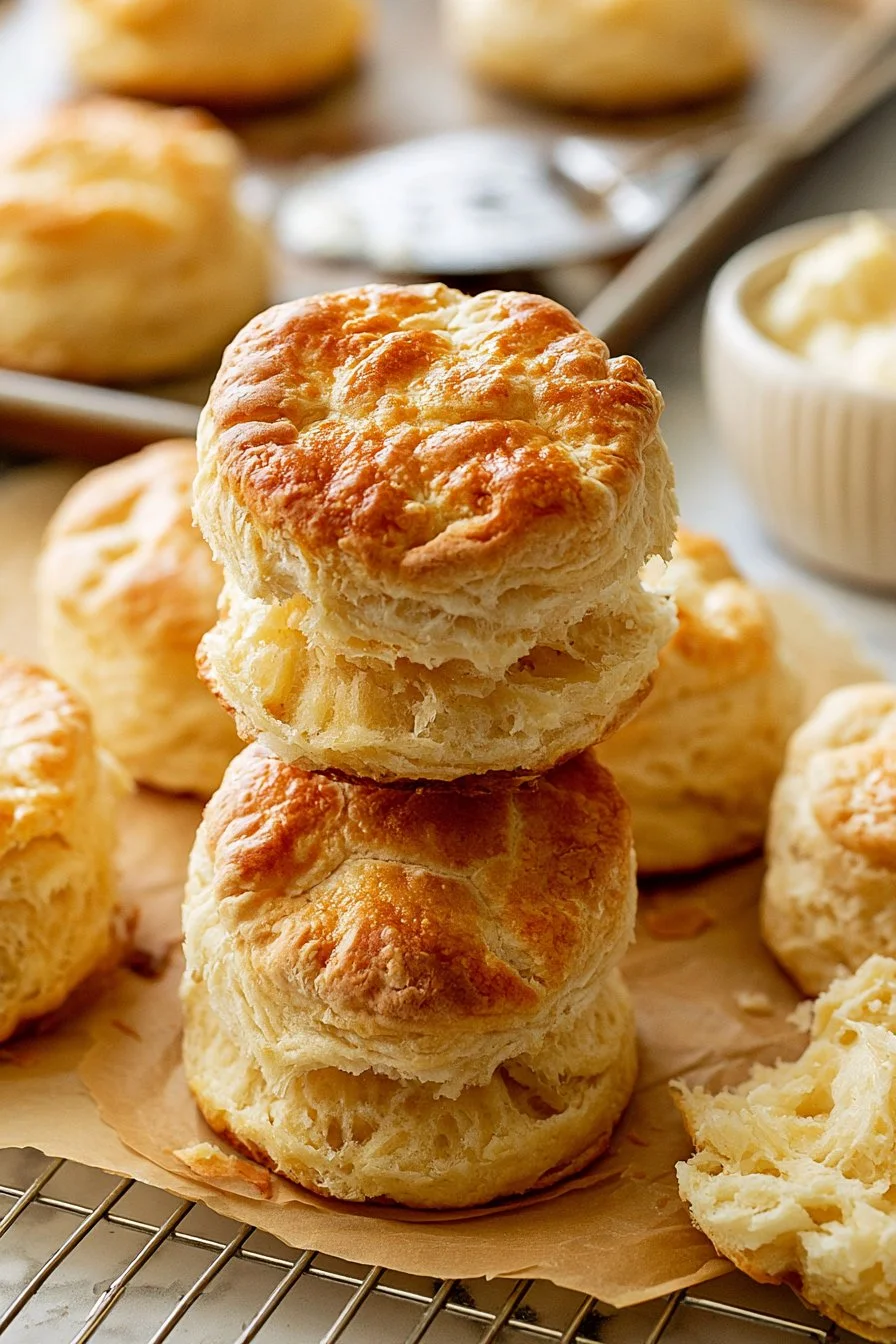
Buttermilk biscuits use cold butter, cultured buttermilk, and a hot oven to make a small batch with tender layers. The dough needs only enough handling to bring it together; persistent kneading makes a tighter biscuit. This recipe produces about eight rounds with a two-inch cutter and a dough thickness close to one inch.
Have the baking sheet ready before mixing so the butter stays cold. Fresh baking powder and soda provide the lift, while the acidic buttermilk supports the soda. The finished centers should be cooked through, with golden tops and dry, lightly colored bottoms.
On This Page
Why This Recipe Works
Pieces of butter remain visible in the dough and melt as the biscuits bake. That uneven distribution helps create distinct layers. A light fold organizes the dough without treating it like yeast bread. Buttermilk biscuits can still be tender if they look a little rough before baking; a perfectly smooth kneaded surface is not the goal.
The oven should be fully heated before the tray goes in. A slow start allows the fat to soften before the dough sets. Place the rounds close together for softer sides, with a small gap so they have room to expand.
Ingredients for Buttermilk Biscuits
Use all-purpose flour measured lightly, cold unsalted butter, and cold cultured buttermilk. Salt seasons the dough, while both baking powder and baking soda are measured independently. Baking soda is much more concentrated and cannot replace the tablespoon of baking powder.
For these buttermilk biscuits, cut the butter into small cubes and work it into the flour until some pea-sized pieces remain. The measured ¾ cup buttermilk is the starting amount. If the flour remains loose at the bottom of the bowl, add only a small additional spoonful at a time; flour handling and moisture vary.
Biscuit Dough
- 2 cups all-purpose flour (spooned and leveled)
- 1 tablespoon baking powder
- ½ teaspoon baking soda
- ½ teaspoon salt
- ½ cup unsalted butter (cold and cubed)
- ¾ cup cultured buttermilk (cold)
Only If Needed
- 1–2 tablespoons additional cold buttermilk (use only when loose flour remains and the dough will not form clumps)
- as needed extra flour (for lightly dusting the work surface)
How to Make Buttermilk Biscuits
Whisk the dry ingredients thoroughly so the leaveners do not sit in one pocket. Rub or cut in the butter quickly, then use a fork or spatula to incorporate the cold liquid. Stop once you have shaggy clumps that hold together when pressed. Scraping the bottom of the bowl is better than stirring continuously until the mixture becomes elastic.
Turn the buttermilk biscuits dough onto a lightly floured surface and press it into a rectangle. Fold it into thirds once or twice, handling gently, then pat it close to one inch thick. Press a two-inch cutter straight down. Twisting can compress the edges that you want to rise.
Gather the scraps with minimal handling and cut the remaining rounds. Bake at 425°F for about 12–18 minutes, checking near the early end. Look for golden surfaces, set sides, and centers that no longer look wet when one biscuit is split. The second cutting may be less even than the first without being unusable.
How to Serve
Give buttermilk biscuits about five minutes on a rack, then split and serve warm. The butter already in the dough provides richness, so additional butter, jam, or honey can stay optional at the table. Pair them with eggs for breakfast or offer alongside a bowl of soup.
Eight biscuits is an approximate yield because cutter size and dough thickness affect the count. Using a larger cutter produces fewer rounds and may require a longer bake. Do not flatten the dough thinner simply to force the same number with a different cutter.
Storage
Cool buttermilk biscuits completely before closing them in a container. Keep at room temperature for up to two days for best texture. Wrapping while warm traps steam and makes the exterior damp; leaving them exposed too long dries the interiors.
Freeze cooled biscuits for up to two months for quality, wrapped and enclosed in a freezer bag. Thaw covered or warm from frozen in a moderate oven. Reheat only what you plan to eat, and discard any biscuit showing mold.
The cold-butter handling and gentle-fold technique follow guidance from the King Arthur Test Kitchen’s Buttermilk Biscuits recipe; this batch retains its original ingredient quantities.
The FDA safe food handling guidance explains prompt refrigeration and temperature checks for perishable foods.
Tips and Variations
For buttermilk biscuits, a lightly floured work surface prevents sticking without introducing a large unmeasured amount of flour. Brush excess flour from the rounds before putting them on the tray. If the butter becomes soft during handling, chill the shaped biscuits briefly before baking; add that time to your plan.
Milk alone is not identical to cultured buttermilk in a formula that includes baking soda. Likewise, a gluten-free flour blend needs its own tested recipe rather than a promise that this dough works unchanged. Use the written ingredients when you want the intended result.
Frequently Asked Questions
Why are my buttermilk biscuits dense?
Too much flour, softened butter, old leaveners, or heavy handling can all limit lift. Measure lightly and mix only until the dough holds together.
Do I need a rolling pin?
No. Gentle hand patting is enough, and helps avoid pressing the dough thinner than intended.
Should I twist the cutter?
Press it straight down and lift it straight up. Keep the layered edges as open as possible.
Can buttermilk biscuits be frozen after baking?
Yes. Cool them fully first, wrap well, and freeze for up to two months for quality. Warm individual portions as needed.
What if the mixture will not hold together?
Check for dry flour under the clumps, then add cold buttermilk a tablespoon at a time only if needed. Stop as soon as it forms a workable dough.
More Recipes to Try
- Small Milk Biscuits with Cold Butter
- Hot Honey Chicken Biscuits
- Sausage Hashbrown Breakfast Casserole
- Creamy Vegetable Soup
Fluffy Homemade Buttermilk Biscuits
Ingredients
Biscuit Dough
- 2 cups all-purpose flour spooned and leveled
- 1 tablespoon baking powder
- ½ teaspoon baking soda
- ½ teaspoon salt
- ½ cup unsalted butter cold and cubed
- ¾ cup cultured buttermilk cold
Only If Needed
- 1–2 tablespoons additional cold buttermilk use only when loose flour remains and the dough will not form clumps
- as needed extra flour for lightly dusting the work surface
Instructions
- Preheat to 425°F. Line a baking sheet with parchment rated for that temperature. Whisk the flour, baking powder, baking soda, and salt together.
- Cut in the cold cubed butter quickly, leaving small pea-sized pieces among finer crumbs. Pour in the ¾ cup cold buttermilk and stir gently to form shaggy clumps. Only if dry flour prevents the dough holding together, add extra buttermilk 1 tablespoon at a time, up to 2 tablespoons.
- Transfer to a lightly floured board. Press into a rectangle, fold into thirds once or twice, and pat to about 1 inch thick without vigorous kneading.
- Cut straight down with a 2-inch cutter, without twisting. Gently gather scraps and cut again for approximately 8 biscuits. Place on the tray with about ¼ inch between them.
- Bake for 12–18 minutes until golden, with set sides and fully cooked centers. Transfer to a rack, cool 5 minutes, and serve warm.