
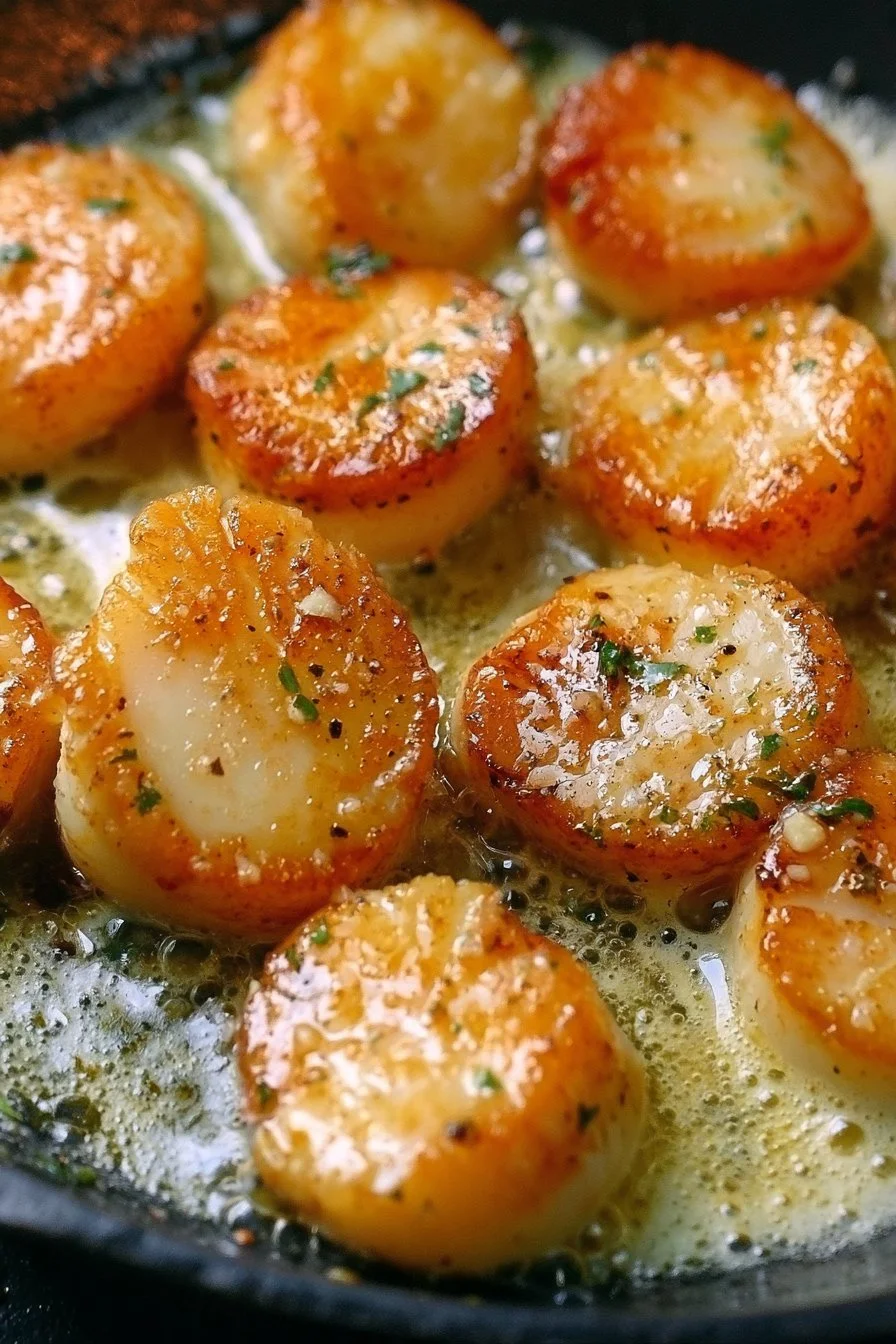
Seared scallops develop a golden crust in olive oil, then receive a quick garlic, lemon, and parsley butter sauce. This version separates the hot searing stage from the gentler sauce stage to keep the butter and garlic from burning.
Twelve ounces makes two main-course portions. A wide skillet, dry seafood, and a short cooking time matter more than repeatedly moving the scallops around the pan.
On This Page
Why This Recipe Works
Surface water must evaporate before browning can begin. Blotting well and leaving space in the skillet help the scallops sear instead of steam. Olive oil handles the initial heat, while butter goes in after the seafood comes out. Lemon adds acidity to the finished sauce, and parsley contributes freshness without a long simmer.
Ingredients
Use large sea scallops, fresh or fully thawed. Remove the small side muscle and dry them thoroughly. Use up to one teaspoon each of salt and pepper, starting with a light sprinkle and adding more to taste. Have the two tablespoons each of oil and butter ready, along with minced garlic, fresh lemon juice, and chopped parsley.
- 12 ounces sea scallops, thawed if frozen, side muscles removed
- 1 teaspoon salt, use up to this amount, to taste
- 1 teaspoon black pepper, use up to this amount, to taste
- 2 tablespoons olive oil
- 2 tablespoons butter
- 2 cloves garlic, minced
- 1 tablespoon fresh lemon juice
- 2 tablespoons fresh parsley, chopped
How to Make Seared Scallops
1. Prepare a dry surface. Set the scallops on paper towels and blot the tops, bottoms, and edges. If thawed seafood releases more liquid, replace the wet towels before cooking. Season just before it goes into the pan. A dry exterior gives the skillet a chance to develop a crust while the interior remains tender; a bowl of pooled thawing water works against that result.
2. Sear in a wide skillet. Warm the olive oil over medium-high heat until it shimmers. Place the scallops flat-side down in a single layer, with visible gaps between them. Let the first side cook undisturbed for roughly two to three minutes. A golden surface and easier release from the pan indicate that a crust has formed. Forcing a spatula underneath too early can tear the browned surface.
3. Finish the scallops promptly. Turn once and cook the second side for another two to three minutes, adjusting for size. The flesh should turn milky white and opaque, with a firm but yielding feel; check for 145°F in the center. Transfer finished pieces to a plate immediately. More time in the skillet after that point makes the texture increasingly rubbery.
4. Make the butter sauce gently. Lower the heat to medium-low and let an overheated skillet settle briefly before adding butter. When it melts, stir in garlic for about thirty seconds, just until fragrant rather than brown. Remove the pan from the heat before stirring in lemon juice and parsley. Spoon this loose butter sauce over the plated scallops; it is a light coating, not a thick gravy.
How to Serve
Split the scallops and sauce evenly between two plates. Serve with rice, small pasta shapes, or roasted green beans, keeping the portion of sauce modest so the crust remains noticeable. Put any remaining lemon on the table for an extra squeeze.
Storage and Reheating
Refrigerate cooked scallops in a covered shallow container within two hours and use within two days for best texture. Warm leftovers over low heat with their sauce until the center reaches 165°F. Reheating firms the seafood, so heat only the portion you need. Keep raw scallops refrigerated and cook within one to two days. See federal cold-storage guidance for refrigerated foods.
Tips and Variations
- Use a skillet wide enough for one uncrowded batch.
- Season shortly before searing rather than leaving salted scallops to release liquid.
- Keep minced garlic ready before the sauce stage begins.
- Take the pan off the heat before adding the lemon and parsley.
Frequently Asked Questions
What are dry-packed scallops?
They have not been treated with a solution to increase their water content. They generally release less liquid in the pan.
Can I use a nonstick skillet?
Yes, use a sturdy one suitable for medium-high heat. Stainless steel or cast iron can produce a more pronounced crust.
Why do my scallops stick?
The crust may not have formed yet. Give the first side a little more time before gently trying to lift it.
Can I leave out parsley?
Yes, the lemon and garlic still flavor the butter. Chopped chives make a different but compatible finish.
Can I double this?
Cook two uncrowded batches and divide the oil between them. Make the sauce after both batches are out of the skillet.
More Recipe Ideas
- Garlic Butter Herb Scallops
- Brown Butter Scallops
- Garlic Butter Steak and Scallops
- Roasted Green Beans with Garlic and Parmesan
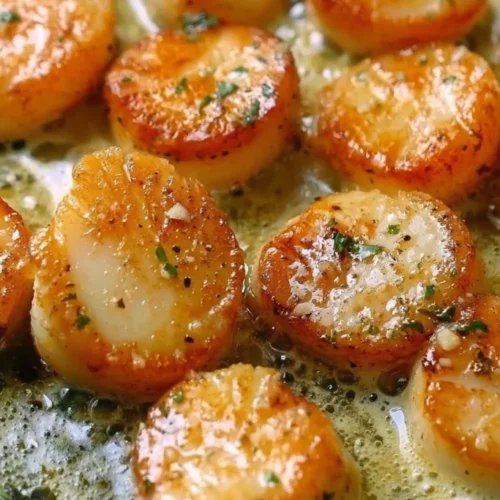
Seared Scallops
Ingredients
Scallops and Sauce
- 12 ounces sea scallops thawed if frozen, side muscles removed
- 1 teaspoon salt use up to this amount, to taste
- 1 teaspoon black pepper use up to this amount, to taste
- 2 tablespoons olive oil
- 2 tablespoons butter
- 2 cloves garlic minced
- 1 tablespoon fresh lemon juice
- 2 tablespoons fresh parsley chopped
Instructions
Sear and Sauce
- Remove side muscles and pat scallops dry. Season with salt and pepper to taste, using up to 1 teaspoon each.
- Heat olive oil in a wide skillet over medium-high heat until shimmering. Add scallops in one spaced layer and cook 2–3 minutes until the underside is golden.
- Turn and cook 2–3 minutes until opaque and firm, with a center temperature of 145°F. Transfer to a plate.
- Reduce to medium-low, melt butter, and cook garlic about 30 seconds until fragrant. Remove from heat and stir in lemon juice and parsley.
- Divide scallops into 2 portions and spoon the warm sauce over them.
Notes
- Refrigerate leftovers within 2 hours and use within 2 days.
- Reheat gently to 165°F; the texture will be firmer.