
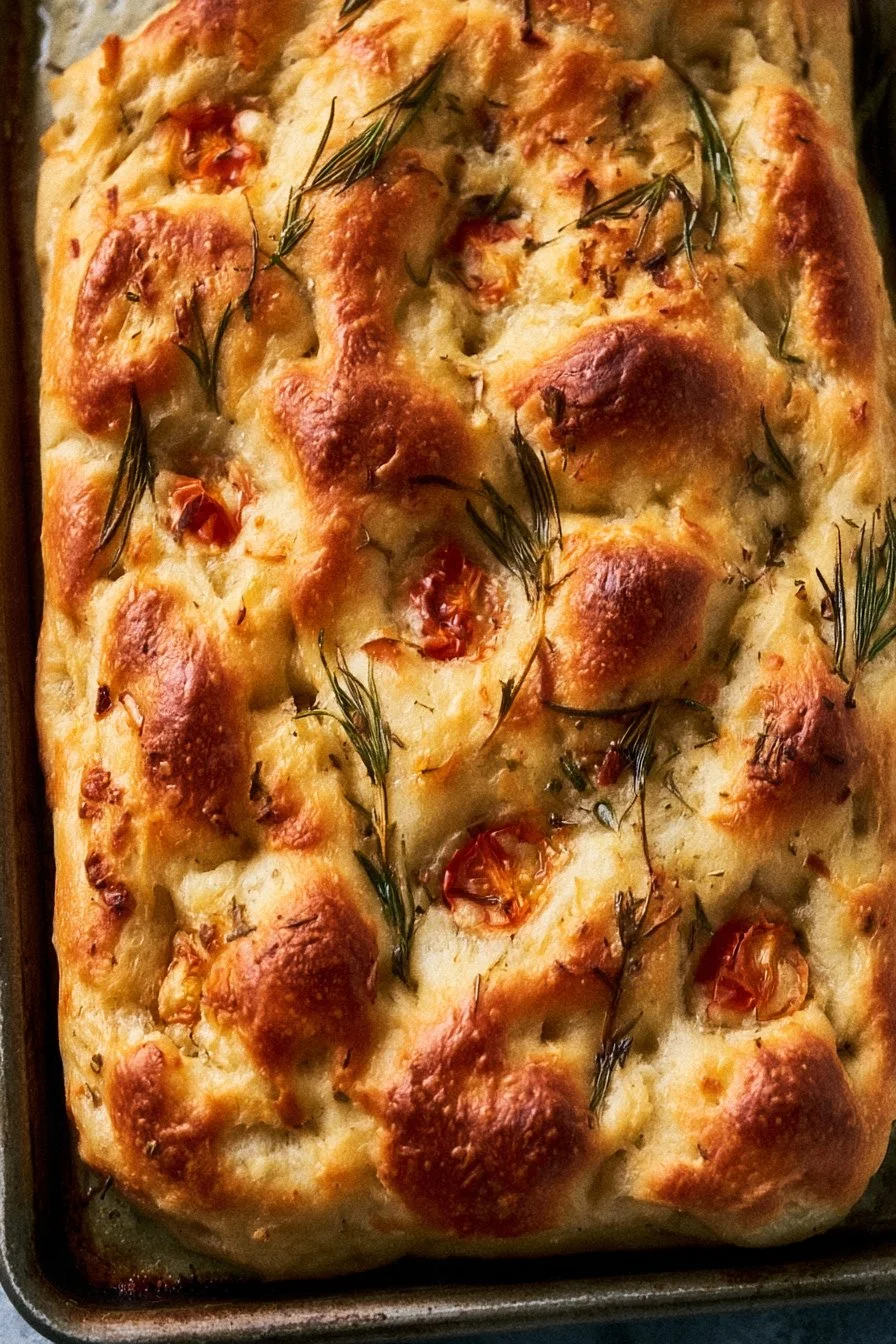
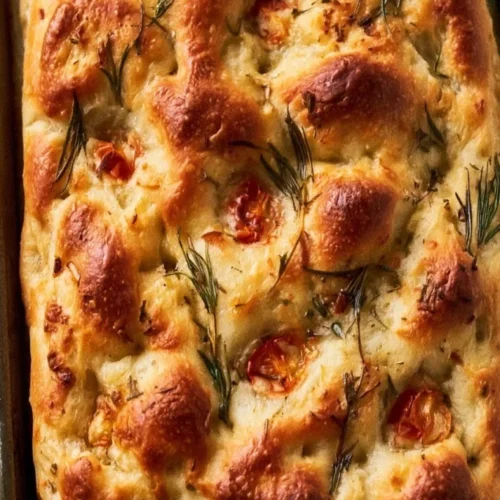
Rosemary focaccia uses a sticky dough with five hundred grams of flour and four hundred milliliters of water, strengthened by two short folding sessions. Three thirty-minute rests give it time to expand before a hot bake. The tray size matters: approximately thirteen and three-quarter by nine and one-half inches keeps this amount of dough from spreading too thin. Use rosemary, flaky salt, and a little additional olive oil to finish the dimpled surface.
On This Page
Why This Recipe Works
Rosemary focaccia starts much wetter than a dough you can knead easily on a floured counter. The folds work in the bowl, so there is no need to keep adding flour just to stop it sticking to your hands. Resting lets the dough relax between those handling stages.
Oil in the dough and on the tray helps the finished bread release and gives its edges flavor. The final rest happens in the baking tray. You want visible expansion and a soft, aerated surface before making the dimples, rather than punching all the air out.
Ingredients for Rosemary Focaccia
Use bread flour, warm water, dry yeast, olive oil, and fine salt for rosemary focaccia. Follow the yeast label for water temperature; comfortably warm is different from hot. The twenty milliliters oil goes into the dough. Additional oil for the tray, hands, and top is separate and should not be silently taken out of that measured portion. Rosemary and flaky salt are finishing ingredients.
Main ingredients
- 500 g bread flour (weighed)
- 400 ml warm water (warm; follow yeast label temperature)
- 2 tsp dry yeast
- 20 ml extra virgin olive oil (for the dough only)
- 2 tsp salt
- rosemary (chopped)
- flaky salt
Tray and finishing
- as needed extra virgin olive oil (additional oil for tray, hands, and topping)
How to Make Rosemary Focaccia
Mix water, yeast, and the measured dough oil in a large bowl. Add flour and fine salt, stirring until every dry pocket is moistened. The dough will look rough and cling to the spoon. Cover and place somewhere comfortably warm for thirty minutes; if using an oven as a proofing space, its heat must be off.
With wet or lightly oiled hands, lift one side of the dough and fold it toward the center, rotating around the bowl. Complete about five lifts and folds, then gently scoop and release the dough several times to gather it. Do not tear it or add handfuls of flour.
Cover for another thirty minutes, then repeat the short folding session. Rosemary focaccia should feel somewhat more cohesive, although still sticky. Oil the tray thoroughly and ease the dough into it, encouraging it toward the corners without forcing a tight stretch.
Give it the final covered thirty-minute rest. If it keeps shrinking away from a corner, allow a little more relaxation before gently stretching again. Remove the dough from any oven proofing space before preheating the oven to 450°F with conventional heat.
Drizzle a little oil over rosemary focaccia, press fingertips down gently to form dimples, and scatter rosemary and flaky salt. Bake for fifteen to eighteen minutes, extending if necessary until golden and baked through. Transfer to a rack and allow fifteen minutes cooling before cutting ten pieces.
How to Serve
Serve rosemary focaccia warm after its short cooling period, or let it cool fully before using it for sandwiches. A serrated knife avoids flattening the soft center. Plain soups, salads, and cooked vegetables all make suitable partners. When slicing horizontally for sandwiches, support the bread with a flat hand above the knife’s path. Additional fillings are separate from the bread recipe and its ten-piece yield.
Storage
Let rosemary focaccia cool completely before sealing it, so steam does not soften the crust immediately. Keep plain bread covered at room temperature for one to two days for quality, or freeze portions for longer storage. Rewarm briefly in the oven to refresh the edges. Bread with added perishable sandwich fillings should follow the filling’s refrigeration requirements rather than the storage advice for plain focaccia.
Adapted from Florencia Baldini’s focaccia at Healthy FloFlo. For why warm water and rising conditions matter, see Iowa State University Extension’s yeast-bread guidance.
Tips and Variations
Rosemary focaccia needs time as well as a warm environment. If the kitchen is cool, the three thirty-minute rests may take longer. Use visible expansion as your guide and do not put the bowl into a heated oven to hurry it along.
Keep the tray close to the specified size and oil right into the corners. The dough’s eighty-percent water-to-flour ratio describes its hydration, not a reason to add another measured cup of water. Lightly wet hands help during folding, but avoid pouring extra water into the bowl.
Frequently Asked Questions
Why is the dough so sticky?
Rosemary focaccia has a high water proportion. Work in the bowl with damp or oiled hands instead of adding excess flour.
Does it need kneading on the counter?
No. Two folding sessions strengthen the dough between its resting periods.
Can I proof it in a warm oven?
Only with the heating element off and a safe warm environment. Remove it before preheating for baking.
What tray size is specified?
Approximately 35×24 cm, or 13.8×9.4 inches. A much larger tray makes the bread thinner.
Is all the rising time included?
Yes. Rosemary focaccia includes ninety minutes resting and fifteen cooling; slower rising extends total time.
More Recipes to Try
Rosemary Focaccia with Stretch-and-Fold Dough
Ingredients
Main ingredients
- 500 g bread flour weighed
- 400 ml warm water warm; follow yeast label temperature
- 2 tsp dry yeast
- 20 ml extra virgin olive oil for the dough only
- 2 tsp salt
- rosemary (chopped)
- flaky salt
Tray and finishing
- as needed extra virgin olive oil additional oil for tray, hands, and topping
Instructions
- Mix water, yeast, and 20 ml oil. Stir in flour and fine salt until no dry flour remains. Cover and rest 30 minutes in a warm place.
- Using damp hands, lift and fold dough toward the center around 5 times, then gently gather it. Cover and rest another 30 minutes.
- Repeat the folds. Oil a 35×24 cm tray well, transfer dough, and spread gently. Cover and rest 30 minutes until visibly puffy.
- Remove from any oven proofing space and preheat to 450°F conventional heat. Add finishing oil, dimples, rosemary, and flaky salt.
- Bake 15–18 minutes until golden and cooked through. Cool on a rack 15 minutes and cut 10 pieces.