
A sourdough starter is a living flour-and-water culture that needs repeated feeding before it can reliably raise bread. A burst of bubbles in the first few days is encouraging, but it is not proof that the culture is ready for a loaf.
This guide builds a small sourdough starter by weight. Equal weights of flour and water create a 100% hydration culture; equal measuring cups do not. A digital kitchen scale, a clean jar, and a simple feeding record make the process easier to follow.
On This Page
Why This Recipe Works
Keeping the amount small reduces how much flour you use while learning the routine. Removing part of the mixture before each feed prevents the jar from growing endlessly and gives the retained culture a measured supply of fresh food.
Your sourdough starter responds to room conditions, flour, and regular care. Readiness matters more than a calendar deadline. The seven-day total is a planning estimate with about an hour of handling spread across the week; some cultures need two weeks or longer.
Ingredients for Sourdough Starter
Use whole-wheat flour for the first mixture and all-purpose flour for the subsequent feeds. The ingredient list shows one starting mixture and one feeding, not the total flour needed for the whole week. Buy enough fresh flour to repeat the schedule.
Use drinking-quality water at room temperature and a jar with ample expansion space. Mark the level of the sourdough starter after feeding with an elastic band or a washable line. A loose lid protects the surface while allowing fermentation gases to escape.
Day 1
- 50 g whole-wheat flour
- 50 g water (room temperature)
Each subsequent feeding
- 50 g starter from your jar (retain this amount; discard the remainder)
- 50 g all-purpose flour (fresh flour at every feeding)
- 50 g water (room temperature; fresh water at every feeding)
How to Make Sourdough Starter
On the first day, combine fifty grams of whole-wheat flour with fifty grams of water. On day two, keep fifty grams of culture and feed it fifty grams each of all-purpose flour and water. From day three onward, repeat that retain-and-feed routine approximately every twelve hours.
Keep the sourdough starter in a comfortably warm place, around 70°F, away from direct heat. Stir each feeding until no dry flour remains and clean the upper inside walls of the jar. Record the time, starting level, peak height, and any changes in smell.
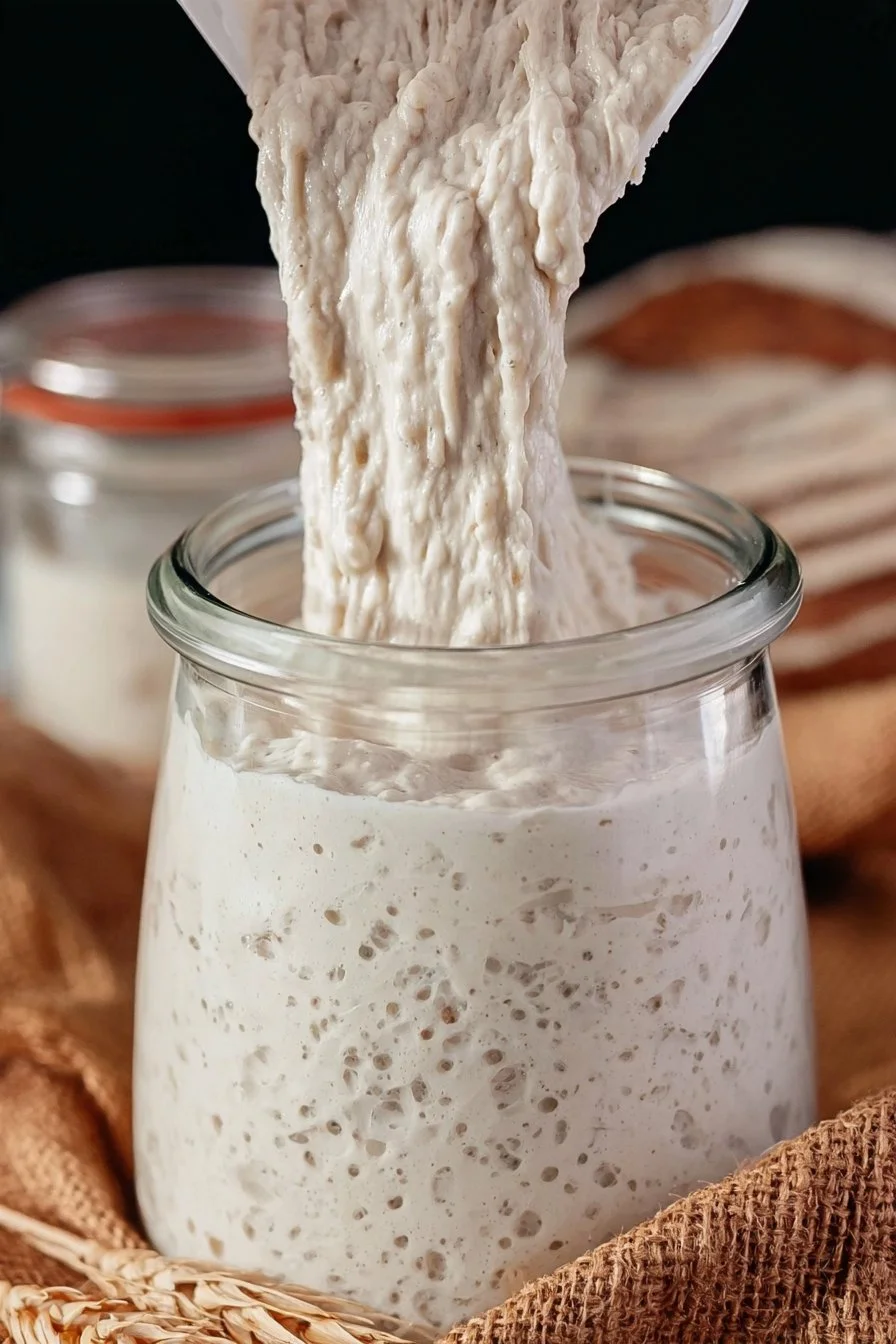
A mature sourdough starter should repeatedly rise to about double its freshly fed volume within six to eight hours, with bubbles throughout and a pleasant tangy smell. Look for that repeatable pattern over several feeds. Do not rely on the first dramatic rise or a float test alone.
Once mature, build the amount needed for your bread recipe in a separate container while keeping some culture back. This small maintenance jar is not enough for every large dough recipe; scale a feed by weight and allow it to become active before measuring what the recipe requires.
How to Serve
Use mature sourdough starter near its active peak when a bread recipe calls for fed starter. Recipes calling for discard have a different purpose and do not necessarily depend on it to raise the dough.
Discard the removed mixture during the first week of establishing the culture. Later, healthy mature discard can be reserved for recipes that cook it thoroughly. Never taste raw starter to assess its quality.
Storage
After the sourdough starter is established, refrigerate it when you do not bake frequently and feed about weekly. Let a refreshed culture begin showing activity before returning it to cold storage. Bring it back to reliable rising with room-temperature feeds before using it for bread.
If you see mold, fuzzy growth, pink or orange streaks, discard the entire culture and clean the container thoroughly before starting again. Do not scrape away a patch and keep using the remainder. An alcohol-smelling liquid layer can indicate hunger, but uncertain contamination is a reason to start fresh.
The small 50 g feeding schedule is adapted from the King Arthur Baking Test Kitchen’s sourdough starter method, with newly written explanations. Handling guidance comes from Colorado State University Extension.
Tips and Variations
A sourdough starter can appear quiet after an early burst of activity. Keep the regular measured feeds, check that the room is not cold, and allow more days rather than adding commercial yeast to imitate readiness.
Use a container that lets you see the rise clearly. A very wide bowl makes a small volume harder to track. Leave enough headroom for expansion and avoid tightly sealing an actively fermenting jar.
Frequently Asked Questions
When is a sourdough starter ready?
When it consistently doubles within roughly six to eight hours after feeding, with widespread bubbles and a tangy aroma. Repeatable performance is more useful than its age alone.
Does equal parts mean equal cups?
No. This method uses equal gram weights of flour and water. Flour is much lighter by volume than water, so matching cups would produce a much wetter mixture.
Why do I remove some before feeding?
Retaining a measured amount keeps the volume manageable and makes the fresh flour-to-culture ratio consistent at every feeding.
Can I use the first few days of discard?
Discard it while the culture is being established. Save discard for thoroughly cooked recipes only after the starter is mature and healthy.
Must it be ready after seven days?
No. Seven days is a useful planning estimate, not a guarantee. Keep feeding and observing if it has not developed reliable rises.
More Recipes to Try
- Sourdough Bread: A Beginner’s Guide
- Classic Sourdough Bread
- How to Make Beginner Basic Overnight Sourdough Bread
- Sourdough Discard Blueberry Muffins
Sourdough Starter from Scratch
Ingredients
Day 1
- 50 g whole-wheat flour
- 50 g water room temperature
Each subsequent feeding
- 50 g starter from your jar retain this amount; discard the remainder
- 50 g all-purpose flour fresh flour at every feeding
- 50 g water room temperature; fresh water at every feeding
Instructions
- Day 1: stir 50 g whole-wheat flour with 50 g room-temperature water in a clean roomy jar. Mark the level, cover loosely, and leave in a comfortable room for 24 hours.
- Day 2: retain 50 g of the culture; discard what remains. Stir in 50 g all-purpose flour and 50 g water. Mark, loosely cover, and wait 24 hours.
- From day 3, repeat the 50 g retained culture plus 50 g flour and 50 g water feed about every 12 hours. Use fresh ingredients for every feed.
- Continue until several successive feeds produce reliable doubling within 6–8 hours, a bubbly interior, and a pleasantly tangy aroma. Allow extra days if necessary.
- Maintain the mature culture with regular feeds. Refrigerate when baking infrequently and feed about once weekly; refresh at room temperature until active before bread baking. Discard any moldy or discolored culture completely.