
Japanese cotton cheesecake has a light, delicate crumb made by folding whipped egg whites into a cream cheese batter. This version uses six eggs, milk, flour, and cornstarch, with a water bath to moderate oven heat. It needs gradual cooling and a refrigerator rest, so plan it well before serving.
Japanese cotton cheesecake is sensitive to mixing and pan preparation. A glossy meringue with curling tips is easier to fold than dry, stiff whites, and a deep solid pan avoids water leaking into the batter. The recipe below includes the vanilla, sugar allocation, and chilling that the preparation requires.
On This Page
Why This Recipe Works
Japanese cotton cheesecake gets its lift from air held in egg whites rather than from baking powder. Adding the sugar gradually during whipping helps produce a more stable foam. Folding in stages spreads that foam through the cream cheese base without stirring it flat.
A shallow water bath creates gentler conditions around the pan. Cooling in stages reduces the abrupt change between a hot oven and the room, though some settling is normal. A light cake can shrink slightly without being a failed bake.
Ingredients for Japanese Cotton Cheesecake
Use block cream cheese, milk, butter, and six separated eggs. Measure the full half cup of sugar for the egg whites; do not also add it to the yolk mixture. Flour and cornstarch should be sifted to avoid small dry pockets.
For Japanese cotton cheesecake, prepare an eight-inch solid round pan around three inches deep. Grease and line the base and sides, with a parchment collar extending about one inch above the rim. Use a larger roasting pan that can hold the cake pan level with water around it.
Cheesecake Batter
- 6 large eggs (Separate yolks and whites)
- 1 cup cream cheese (Block cream cheese, softened)
- 1/2 cup milk (Whole milk is recommended)
- 1/2 cup granulated sugar (Entire amount added gradually to the egg whites)
- 1/4 cup all-purpose flour (Sifted; gluten-free substitutions not validated)
- 1/4 cup cornstarch
- 1/4 cup unsalted butter (Warm with the cream cheese and milk)
- 1 teaspoon vanilla extract
- 1/4 teaspoon salt
For the pan
- as needed butter or neutral oil (for greasing)
How to Make Japanese Cotton Cheesecake
Warm cream cheese, butter, and milk gently over a water bath until smooth. Let this mixture become lukewarm before stirring in yolks and vanilla, then sift in flour, cornstarch, and salt. A hot base can damage the eggs and weaken the foam later.
Beat whites in a clean grease-free bowl, adding sugar gradually once they are foamy. Stop at glossy soft-to-medium peaks with tips that bend. Fold a third into the base to lighten it, then fold in the remainder in two additions. Bake Japanese cotton cheesecake in its water bath until the center is set, gently springy, and no longer fluid. A center temperature of at least 160°F provides an egg-dish safety check.
How to Serve
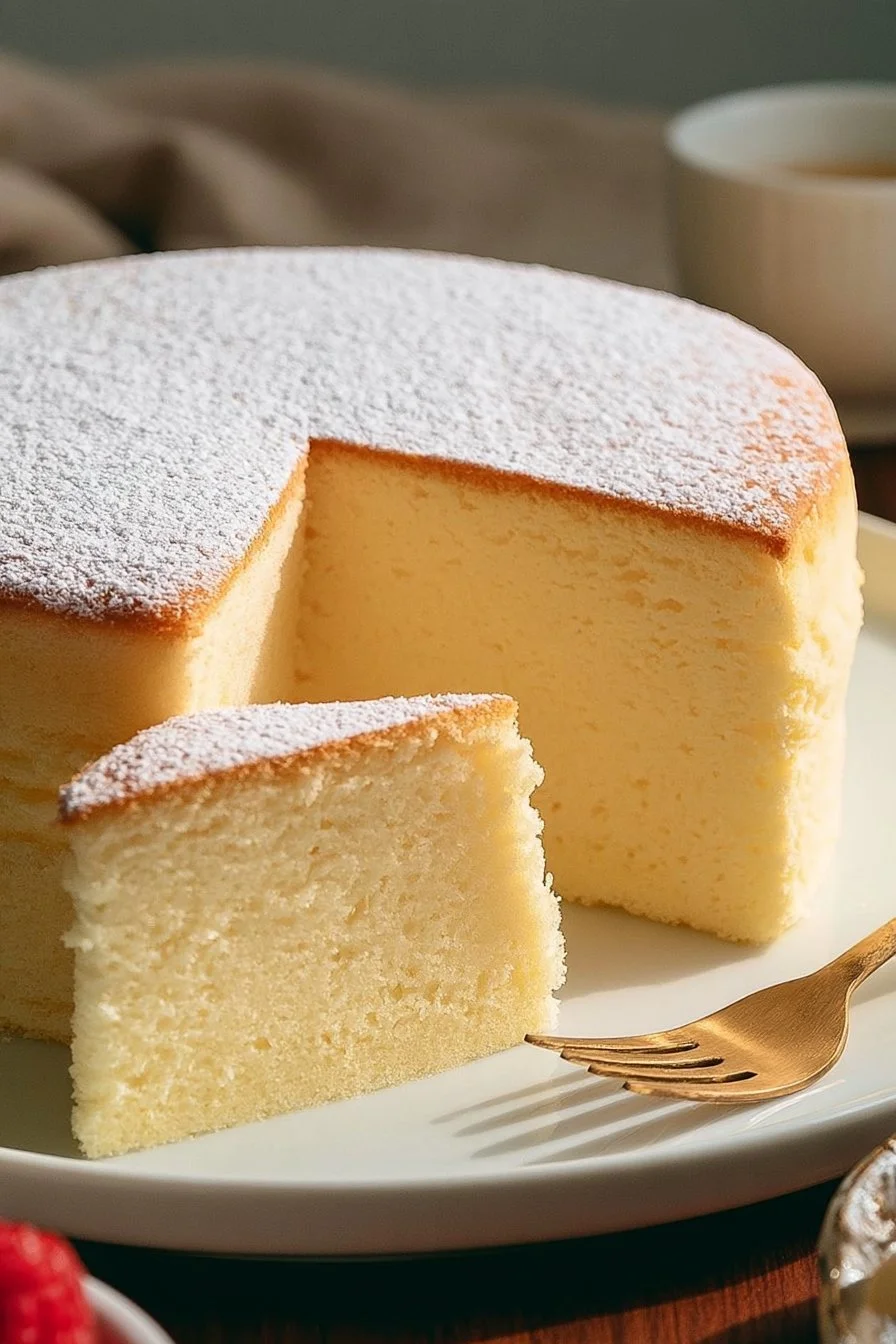
After cooling and chilling, cut Japanese cotton cheesecake into eight slices with a thin clean knife. Wipe the knife between cuts rather than dragging a crumb-covered blade through the delicate center. Serve chilled or let the individual slice lose its refrigerator edge briefly.
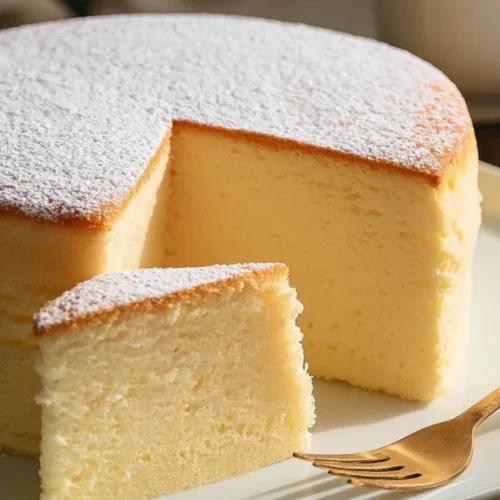
A dusting of powdered sugar in an illustration is a presentation idea, not an ingredient required for this formula. The plain cake has a gentle cream cheese flavor and does not need a heavy frosting.
Storage
Once the oven rest is finished, cool Japanese cotton cheesecake on a rack, then refrigerate within two hours of the end of baking. The gradual room cooling is not permission to leave an egg-and-dairy cake out overnight. Chill at least four hours before slicing.
Keep covered in the refrigerator for three to four days. Wrapped portions can be frozen for about one month, but the airy texture may change after thawing. Thaw in the refrigerator and avoid repeated warming and chilling.
Method guidance: King Arthur Baking, Japanese-Style Souffle Cheesecake, for meringue, lined-pan, water-bath, and gradual-cooling technique. This site retains its six-egg milk-and-cornstarch formula rather than copying that source ingredient list. For egg-dish doneness, see the official safe minimum internal temperature chart.
Tips and Variations
For Japanese cotton cheesecake, keep the oven non-fan at 320°F and avoid opening the door repeatedly early in the bake. If the top is browning while the center remains fluid, lower the exposure with a loose foil shield rather than pulling the cake out early.
Fill the roasting pan carefully after positioning it in the oven, using hot water about an inch deep and below the cake-pan rim. When baking ends, remove the cake pan from the water bath carefully before its short oven rest. Hot water and a large pan require a steady grip.
Frequently Asked Questions
Should the whites be stiff?
For Japanese cotton cheesecake, use glossy soft-to-medium peaks that curl at the tip. Dry, rigid whites are harder to fold smoothly and may leave uneven pockets.
Where does the sugar go?
Gradually add the full half cup to the egg whites as they whip. This version does not split sugar between the whites and the cream cheese base.
Can I use a springform pan?
A solid deep pan is specified for Japanese cotton cheesecake to reduce water-bath leaks. A springform setup needs additional waterproofing and is not the method written here.
How do I check doneness?
Look for a set center with a small gentle jiggle rather than sloshing batter. A skewer should not show wet batter, and an instant-read thermometer should reach at least 160°F in the center.
Why is total time so long?
The estimate includes baking, a thirty-minute oven rest, about an hour of rack cooling, and at least four hours in the refrigerator. Chilling is part of finishing the cake, not optional serving decoration.
More Recipes to Try
- New York Style Cheesecake
- Classic Cheesecake Recipe
- No Bake Key Lime Cheesecake
- Lemon Blueberry Cheesecake
Japanese Cotton Cheesecake
Ingredients
Cheesecake Batter
- 6 large eggs Separate yolks and whites
- 1 cup cream cheese Block cream cheese, softened
- 1/2 cup milk Whole milk is recommended
- 1/2 cup granulated sugar Entire amount added gradually to the egg whites
- 1/4 cup all-purpose flour Sifted; gluten-free substitutions not validated
- 1/4 cup cornstarch
- 1/4 cup unsalted butter Warm with the cream cheese and milk
- 1 teaspoon vanilla extract
- 1/4 teaspoon salt
For the pan
- as needed butter or neutral oil for greasing
Instructions
- Heat a non-fan oven to 320°F. Grease an 8-inch solid round pan about 3 inches deep. Line the base and sides with parchment, leaving a collar about 1 inch above the rim. Place it inside a larger roasting pan.
- Over gently simmering water, stir cream cheese, butter, and milk in a heatproof bowl until smooth. Remove and cool to lukewarm. Mix the vanilla and yolks into the lukewarm base. Pass the flour and cornstarch through a sieve with the salt, then incorporate them until smooth.
- Whip egg whites in a clean dry bowl until foamy. Gradually add all ½ cup sugar and beat to glossy soft-to-medium peaks whose tips bend.
- Fold one third of the meringue into the cheese mixture. Fold the remainder in two batches with broad gentle strokes and pour into the lined pan.
- Position the roasting pan in the oven. Carefully pour hot water around the cake pan to about 1 inch deep, keeping below its rim. Bake 60–80 minutes, until the center is set with only a slight jiggle, a skewer has no wet batter, and the center reaches at least 160°F.
- Switch off the oven. Carefully lift the cake pan from the hot water and return it to the oven rack with the door ajar for 30 minutes. Transfer to a rack for about 60 minutes, then refrigerate within 2 hours after baking.
- Chill at least 4 hours before unmolding and slicing into 8 portions. Cover and keep refrigerated.