
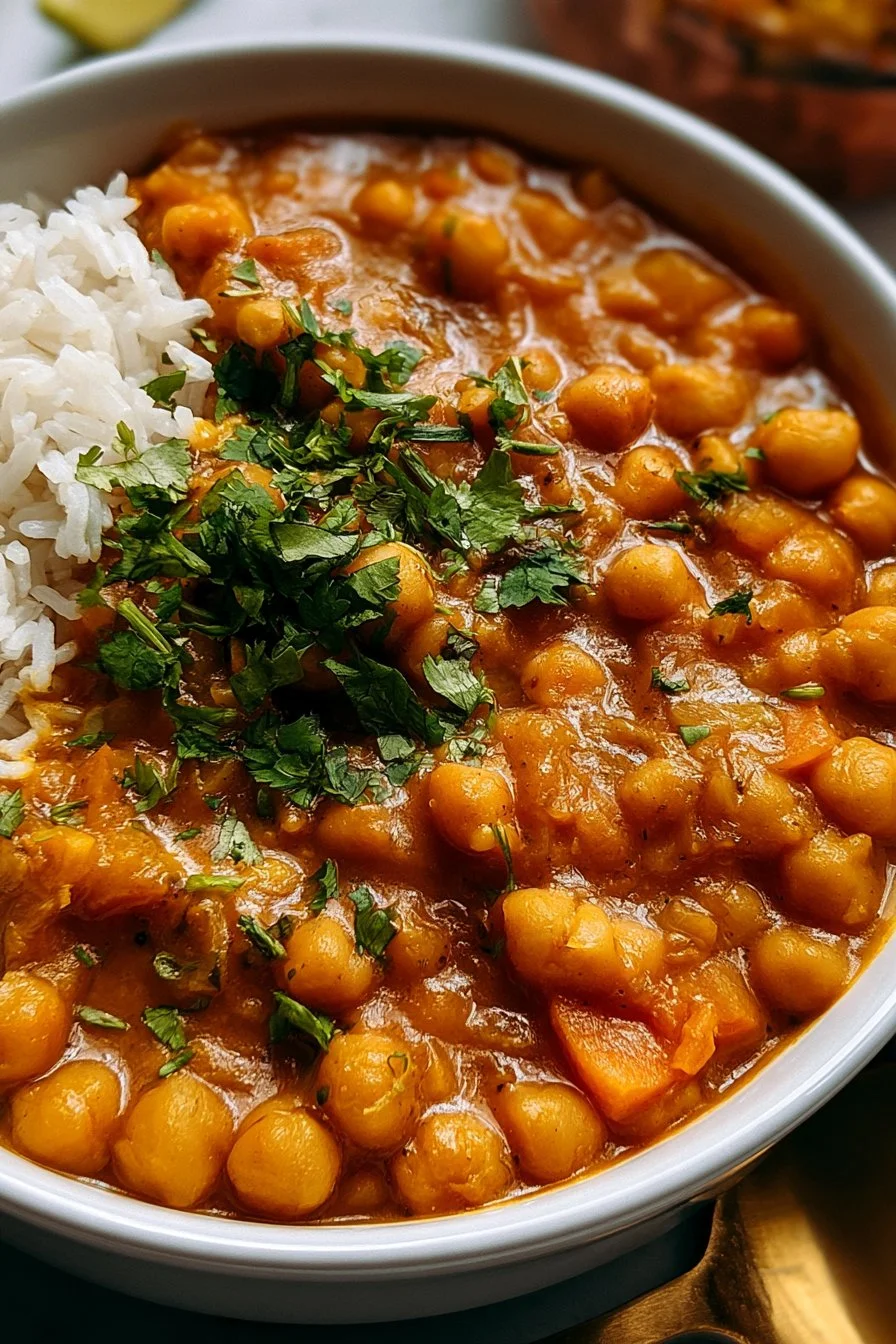
Chickpea curry combines cooked chickpeas with a tomato-and-coconut sauce, garlic, ginger, and warm dry spices. It is a substantial pot, counted as four generous main portions rather than four small side bowls. Optional spinach adds greens near the end without needing a separate long cooking stage.
This chickpea curry uses drained canned chickpeas or an equivalent four and a half cups of already cooked ones. Dry uncooked chickpeas are not simmered directly into the short sauce method. Garam masala is stirred in near the finish, and lemon or lime can brighten each bowl at serving.
On This Page
Why This Recipe Works
Chickpea curry builds flavor by softening onion before briefly heating garlic, ginger, and spices. A little stock from the measured amount helps if the dry spices begin sticking. The aim is a fragrant base, not blackened spice powder.
Tomatoes and coconut milk then form a sauce around the beans. A moderate simmer reduces it, while a gentle stir keeps chickpeas intact. Adding optional spinach at the end preserves more of its color than cooking it through the whole simmer.
Ingredients for Chickpea Curry
Use three fifteen-ounce cans of chickpeas, measured before draining, or four and a half cups cooked chickpeas as an alternative. Choose plain unsweetened coconut milk and a fifteen-ounce can of crushed tomatoes. The two cups of vegetable stock are the initial amount, including any small splash used for the spice stage.
For chickpea curry, grate ginger and garlic finely and chop the onion small. Curry powder and garam masala are different seasoning blends and both have their named stage. The optional sugar is limited to two teaspoons after tasting; it is not an automatic replacement for adjusting salt or acidity.
Curry
- 1 tablespoon olive oil
- 1 large onion (finely chopped)
- 3 cloves garlic (grated)
- 1 inch ginger (grated)
- 2 teaspoons curry powder
- 1 teaspoon ground coriander
- 1 teaspoon ground cumin
- 1 teaspoon turmeric powder
- ¼ teaspoon red pepper flakes
- 3 cans (15 ounces each) chickpeas (drained) (Drain and rinse; OR use 4½ cups cooked chickpeas, not both)
- 2 cups vegetable stock (Initial amount; use any 2-tablespoon spice-stage splash from this measure)
- 1 can (15 ounces) crushed tomatoes
- 1 can (14 ounces) coconut milk (Plain unsweetened canned coconut milk; no simultaneous cream addition)
- 4 cups spinach (optional)
- 1 teaspoon salt
- to taste black pepper
- 1 teaspoon garam masala
- 2 teaspoons sugar (optional, to balance the spices)
Serving additions
- 1 tablespoon lemon or lime juice (For serving, divided across portions)
- 4 cups cooked basmati rice (Optional, prepared separately; OR 4 portions naan or paratha)
- 4 tablespoons raita or plain Greek yogurt (Optional topping, 1 tablespoon per portion)
- 2 tablespoons chopped fresh cilantro (Optional garnish)
Only if needed
- 1/4–1/2 cup additional vegetable stock (Add in small amounts for a thinner sauce)
How to Make Chickpea Curry
Cook onion in oil until softened, then stir in garlic, ginger, curry powder, coriander, cumin, turmeric, and flakes. Add the chickpeas and turn them through the seasoned base before pouring in remaining stock, tomatoes, and coconut milk.
Simmer chickpea curry for around twenty minutes, stirring occasionally. Fold in spinach if using and heat until wilted. Finish with garam masala, taste, and add optional sugar only if needed. If the sauce is too thick, use a small amount from the separate extra-stock allowance. Add citrus to the portions at serving rather than guessing at an unlisted large squeeze.
How to Serve
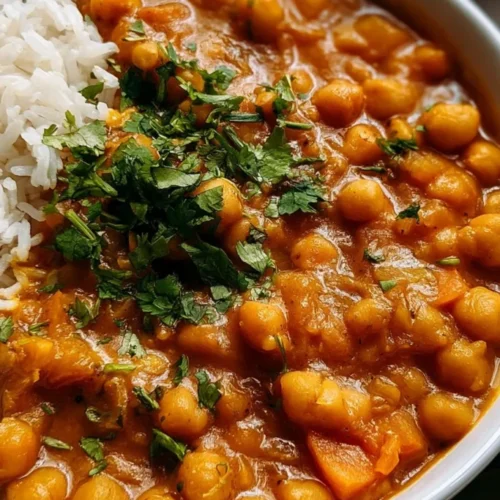
Divide chickpea curry into four generous bowls. If serving it with rice, the optional four cups of cooked basmati provide one cup per person, or choose four naan portions instead. These serving foods must be prepared separately and are not included in the curry cooking time.
Optional yogurt or raita is a small separate topping. It adds dairy if a dairy product is used, so the served dish should not be called dairy-free without checking that choice. Chopped cilantro and a measured tablespoon of lemon or lime juice can be shared across the portions.
Storage
Refrigerate chickpea curry within two hours in shallow covered portions and use within three to four days. Do not wait for a deep pot to become completely cold on the counter. Keep the refrigerator at 40°F or below.
Reheat a portion to 165°F, stirring so the center is hot. Freeze for up to three months in containers with space for expansion and thaw in the refrigerator. The sauce thickens as it sits, so a small splash of water during reheating can restore a spoonable texture.
Recipe and spice-stage method credit: Nico Pallotta, The Plant Based School, Chickpea Curry. For cooling and reheating, see FDA safe food handling guidance.
Tips and Variations
For chickpea curry, reduce red pepper flakes if you want a gentler heat level, but keep the other spice quantities on the first attempt. Different curry powders can vary in heat, so taste the finished sauce before adding more chili.
The written sauce uses coconut milk rather than simultaneously adding heavy cream. More vegetables or uncooked dry legumes require their own cooking schedule. Keep the listed beans and optional spinach for this completed version instead of assuming every substitute finishes in twenty minutes.
Frequently Asked Questions
Do I use canned and cooked chickpeas together?
No. Chickpea curry uses either the drained contents of three cans or four and a half cups prepared chickpeas. They are alternative ways to supply the same ingredient.
When does garam masala go in?
Stir it in after the simmer and optional spinach stage. Its named teaspoon is separate from the curry powder heated at the beginning.
Is rice part of the curry cook time?
No. Chickpea curry timing covers the pot itself. The optional rice or bread is prepared separately, and its cooking time depends on your chosen accompaniment.
Can I leave out spinach?
Yes. It is optional, so omit it without replacing the four cups with another unmeasured vegetable. The sauce and chickpeas remain unchanged.
Does it need yogurt to be complete?
No. Yogurt or raita is an optional topping. The coconut-and-tomato curry is fully prepared before any topping is added.
More Recipes to Try
- Easy Chicken Curry
- Green Lentil and Potato Casserole with Cheese
- Savory Lentil Breakfast Bowl
- Vegetarian Pumpkin Chili
Chickpea Curry
Ingredients
Curry
- 1 tablespoon olive oil
- 1 large onion (finely chopped)
- 3 cloves garlic (grated)
- 1 inch ginger (grated)
- 2 teaspoons curry powder
- 1 teaspoon ground coriander
- 1 teaspoon ground cumin
- 1 teaspoon turmeric powder
- ¼ teaspoon red pepper flakes
- 3 cans (15 ounces each) chickpeas (drained) Drain and rinse; OR use 4½ cups cooked chickpeas, not both
- 2 cups vegetable stock Initial amount; use any 2-tablespoon spice-stage splash from this measure
- 1 can (15 ounces) crushed tomatoes
- 1 can (14 ounces) coconut milk Plain unsweetened canned coconut milk; no simultaneous cream addition
- 4 cups spinach optional
- 1 teaspoon salt
- to taste black pepper
- 1 teaspoon garam masala
- 2 teaspoons sugar optional, to balance the spices
Serving additions
- 1 tablespoon lemon or lime juice For serving, divided across portions
- 4 cups cooked basmati rice Optional, prepared separately; OR 4 portions naan or paratha
- 4 tablespoons raita or plain Greek yogurt Optional topping, 1 tablespoon per portion
- 2 tablespoons chopped fresh cilantro Optional garnish
Only if needed
- 1/4–1/2 cup additional vegetable stock Add in small amounts for a thinner sauce
Instructions
- Heat olive oil in a large pot or deep skillet. Soften finely chopped onion about 4 minutes over medium-low heat.
- Stir in grated garlic and ginger with curry powder, coriander, cumin, turmeric, and red pepper flakes for 1 minute. If needed, use 2 tablespoons taken from the measured initial stock to prevent sticking.
- Add drained chickpeas and stir for 1 minute. Pour in the remaining initial stock, crushed tomatoes, and plain coconut milk; add salt and black pepper.
- Simmer gently approximately 20 minutes, stirring. If using spinach, fold it through and cook around 2 minutes until wilted. Add garam masala, taste, and use the optional sugar only if desired.
- Use small amounts of the separate extra stock only if a thinner sauce is needed. Divide into 4 generous portions; share the measured citrus juice and optional cilantro across them. Offer separately prepared rice or naan and optional yogurt.