
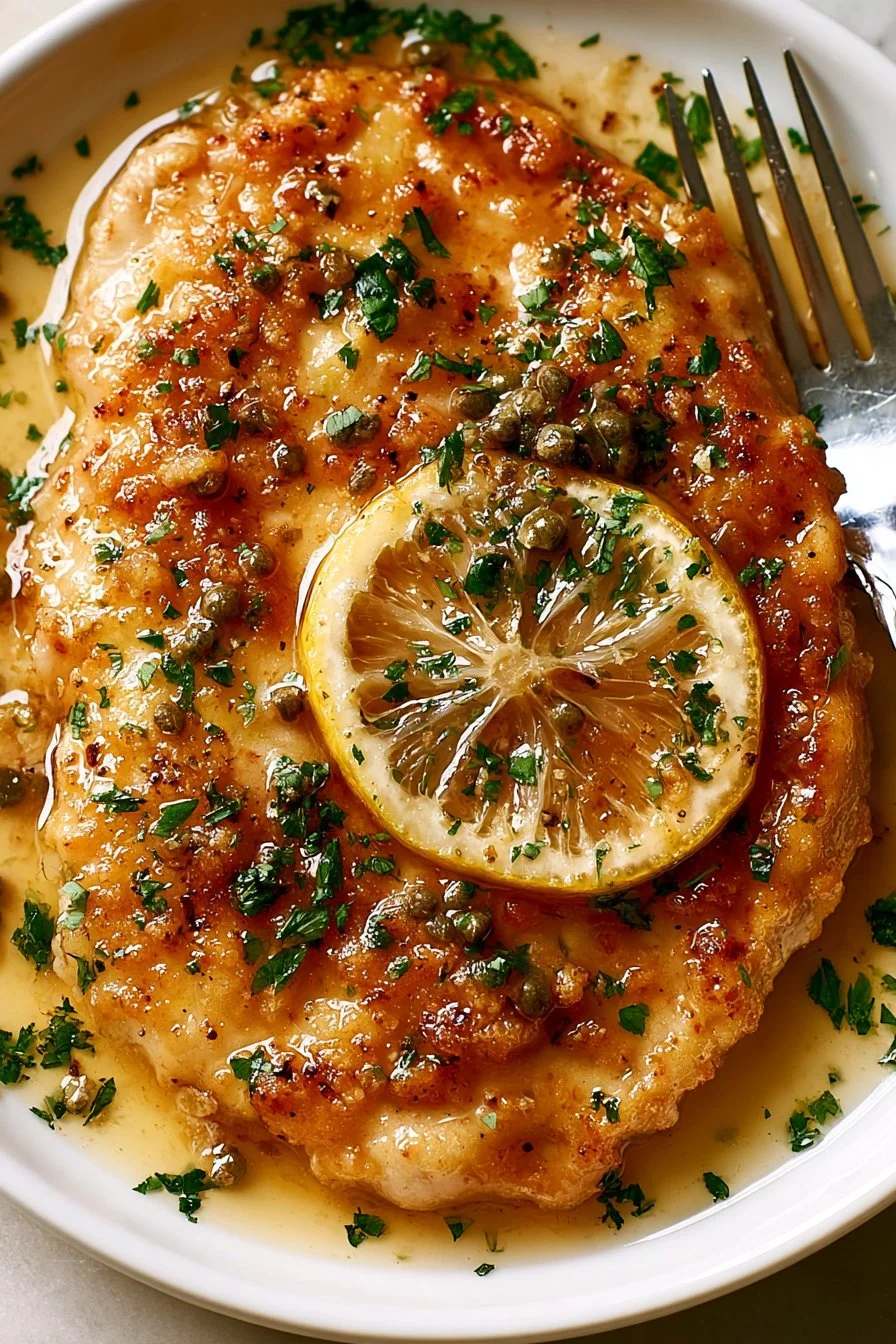
Chicken piccata pairs lightly floured chicken cutlets with a lemon-caper pan sauce finished with butter. This version keeps the original half cup of lemon juice, making a distinctly tangy sauce without cream. Start with four evenly thin pieces of breast meat so the coating browns before the center takes too long to cook.
The key to chicken piccata is managing the skillet in stages: brown the cutlets, loosen the flavorful pan residue with broth, then finish the chicken gently in the sauce. Use a thermometer to confirm 165°F at the thickest part, and add the final butter off the heat for a smoother finish.
On This Page
Why This Recipe Works
A light flour coating helps chicken piccata develop golden edges and contributes a little body to the sauce. Shake off loose flour so it does not burn in the skillet. Capers bring a salty, briny contrast to the lemon, which is why seasoning should be adjusted after the sauce has reduced.
This is a lemon-and-broth version, distinct from cream-based piccata or a recipe with artichokes. Chicken piccata does not need a heavy dairy sauce to coat the meat. Thin cutlets and a moderate simmer keep the meal practical without promising that every thickness cooks in the same number of minutes.
Ingredients for Chicken Piccata
Four cutlets totaling roughly 1½–2 pounds are a useful starting size. Slice large breasts horizontally or pound between food-safe sheets to about ½ inch thickness. The half cup of flour is for dredging, not a quantity to pour into the sauce. Discard flour that has contacted raw chicken.
Use fresh strained lemon juice and lower-sodium broth if possible. Drain the capers; rinsing reduces some surface brine. The three tablespoons of butter are divided: one for browning and two for finishing. Chopped parsley is a measured optional garnish. Chicken piccata still contains wheat and dairy in this written version.
Chicken and sauce
- 4 pieces boneless skinless chicken breast cutlets (About ½ inch thick; approximately 1½–2 pounds total)
- to taste salt and black pepper
- ½ cup all-purpose flour (For dredging only; discard surplus after raw chicken contact)
- 3 tablespoons olive oil
- 3 tablespoons butter (Divided: 1 tablespoon browning, 2 tablespoons finishing)
- ½ cup fresh lemon juice (Strained)
- 1 cup chicken broth
- ¼ cup capers (Drained)
- 2 tablespoons chopped fresh parsley (Optional garnish)
How to Make Chicken Piccata
For chicken piccata, dry and season the cutlets, then turn them in flour and shake off the excess. Heat the oil with one tablespoon of butter in a large skillet over medium to medium-high heat. Brown the chicken about three to four minutes per side without crowding; work in two batches if necessary, sharing the oil already in the pan.
Move the chicken to a plate, remembering that partially cooked meat is not ready to eat. Add broth, lemon juice, and drained capers. Scrape the brown residue from the pan, leaving any blackened bits out, and bring the liquid to a simmer. Return the cutlets and cook gently about three to seven minutes, checking early and continuing until each reaches 165°F. Finish chicken piccata by taking the skillet off the heat and swirling in the remaining butter. Spoon sauce over the cutlets and scatter parsley if using.
How to Serve
Serve chicken piccata hot with a little sauce on each portion. Rice, pasta, or potatoes can catch the extra lemon-butter liquid, while asparagus or roasted carrots provide a separate side. Their preparation is additional to the time in the card.
Taste the sauce before adding more salt because both broth and capers can be salty. This chicken piccata is intentionally sharp with lemon. A mild starch alongside helps balance it without silently changing the listed lemon quantity or adding unlisted cream.
Storage
Put leftover chicken and sauce into shallow covered containers and refrigerate within two hours, or one hour in heat above 90°F. Keep at 40°F or below for three to four days. Freeze portions with sauce for up to two months for best quality, then thaw in the refrigerator.
Reheat chicken piccata gently in a covered skillet until the meat reaches 165°F. The butter sauce may separate after refrigeration or freezing; stirring can improve its texture, but avoid claiming it will look exactly like a freshly finished sauce. Add a small splash of water only if reheating evaporation makes it too concentrated.
The FDA safe food handling guidance explains prompt refrigeration and temperature checks for perishable foods.
Tips and Variations
Check temperature from the side of a thin cutlet so the probe reaches the center without touching the hot pan. If the coating darkens too quickly, lower the heat before the next batch. Chicken piccata needs golden residue for its sauce, not scorched flour.
Do not boil vigorously after swirling in the finishing butter. Keep the capers in the sauce rather than substituting olives without accounting for a different flavor. The written method uses breast cutlets; thicker whole breasts need different cooking time. Chicken piccata is best judged by thickness and measured doneness, not a fixed timer alone.
Frequently Asked Questions
Does this sauce contain cream?
No. Broth, lemon juice, capers, and butter make the sauce. It is different from creamy chicken piccata.
How thin should the chicken be?
Aim for about ½ inch throughout each cutlet. Pound or slice large breasts so the thick end is not much taller than the rest.
Can I use all the dredging flour in the sauce?
No. Only the coating stays on the chicken. Discard the remaining flour after raw poultry contact.
How do I know the cutlets are cooked?
Check the thickest center with a thermometer: chicken piccata must reach 165°F. Extend the gentle simmer when needed.
Why is the sauce very lemony?
This formula uses ½ cup lemon juice with one cup broth. Serve it with a mild side; it is designed as a tart sauce rather than a creamy one.
More Recipes to Try
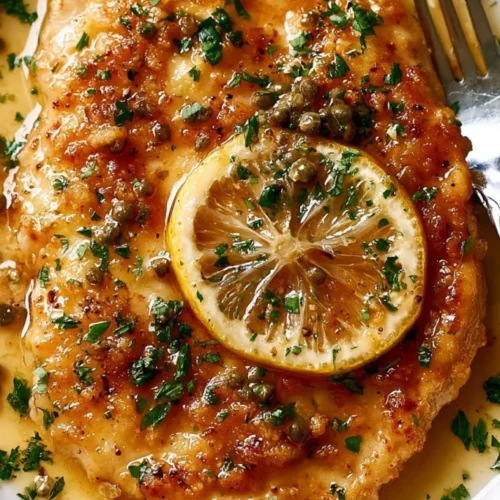
Chicken Piccata with Lemon Sauce
Ingredients
Chicken and sauce
- 4 pieces boneless skinless chicken breast cutlets About ½ inch thick; approximately 1½–2 pounds total
- to taste salt and black pepper
- ½ cup all-purpose flour For dredging only; discard surplus after raw chicken contact
- 3 tablespoons olive oil
- 3 tablespoons butter Divided: 1 tablespoon browning, 2 tablespoons finishing
- ½ cup fresh lemon juice Strained
- 1 cup chicken broth
- ¼ cup capers Drained
- 2 tablespoons chopped fresh parsley Optional garnish
Instructions
- Prepare four boneless, skinless breast cutlets, about ½ inch thick and 1½–2 pounds total. Season to taste, coat lightly with flour, and shake away the surplus.
- In a wide skillet, heat the olive oil with the first tablespoon of butter over medium to medium-high heat. Sear cutlets roughly 3–4 minutes per side, using two batches if they cannot lie flat without overlap.
- Place browned cutlets on a plate. Pour broth and lemon juice into the skillet, add drained capers, and loosen golden pan residue with a spoon. Bring to a gentle simmer.
- Return all cutlets and their plate juices to the pan. Simmer about 3–7 minutes, checking early, until every thickest center measures 165°F; extend cooking for thicker pieces.
- Remove from the heat and stir in the remaining 2 tablespoons butter. Divide chicken and sauce between four plates and finish with optional parsley.